Marathon recovery takes about two to four weeks for most runners. The first week should focus on easy movement, food, and sleep instead of miles. Your legs may feel fine in a few days. Your muscles, tendons, and immune system need more time than that.
So how do you recover after a marathon without losing fitness or picking up an injury? You keep moving gently and return to running in small steps. You also pay close attention to any pain that does not fade.
We see this every fall in Fort Collins. Runners finish strong, then get hurt three weeks later. Usually, they jumped back into hard training too soon.
Your Marathon Recovery Checklist for Today
- Sip fluids steadily all day and add a salty snack with each meal.
- Eat a real meal with protein and carbs within a few hours of finishing.
- Take an easy 15 to 20 minute walk to move blood through sore legs.
- Get to bed early tonight, since deep sleep is when muscle repair ramps up.
- Write down any sharp, one sided, or joint pain so you can track it this week.
How Long Does Marathon Recovery Take?
Most recreational runners need two to four weeks to recover from a marathon. First timers often need the full four. The soreness you can feel fades in days, but the deeper repair keeps going long after.
Sports medicine doctors at Yale Medicine explain that muscle breakdown byproducts stay elevated in the blood for at least a week. They may stay higher than normal for up to four weeks after a marathon. That hidden fatigue explains why an easy run on day ten can still leave you drained.
What Affects Your Recovery Timeline?
Your timeline depends on more than your finish time. These factors tend to stretch it out or shorten it:
- How hard you raced compared with your normal training pace.
- Your weekly mileage and long run history before race day.
- Your age, your stress level, and how well you sleep.
- The course profile, since long downhill stretches create more muscle damage.
- Any aches or tight spots you carried into the race.
The One Day Per Mile Rule
You may hear runners say you should take one easy day for every mile you raced. For a marathon, that works out to roughly 26 days without hard workouts or races.
It is not a lab tested formula, but it is a decent guardrail. We use it as a starting point and then adjust based on how your body actually responds.
What Happens to Your Body After a Marathon?
After a marathon, your body handles muscle damage, empty fuel stores, fluid loss, and a weaker immune system at once. Each one needs its own kind of care.
Muscle and Tendon Damage
Running 26.2 miles creates tiny tears in your muscle fibers, especially in your quads and calves. Your tendons also absorb tens of thousands of repeated loads.
This is why stairs feel brutal for a few days. That delayed soreness usually peaks somewhere between 24 and 72 hours after you finish.
Fuel and Fluid Loss
Your stored carbohydrate is close to empty by the finish line. You also lose a lot of fluid and sodium through sweat, even on a cool Colorado morning.
Refueling is not a single meal. It is a steady process over the next several days.
A Weaker Immune System
Mayo Clinic Orthopedics and Sports Medicine notes that studies have found the immune system is depressed for up to four weeks after a marathon. That is a big reason so many runners catch a cold the week after race day.
Wash your hands often and protect your sleep during this window. Your body is busy rebuilding, so it has less left over to fight off germs.
What Should You Do in the First 48 Hours After a Marathon?
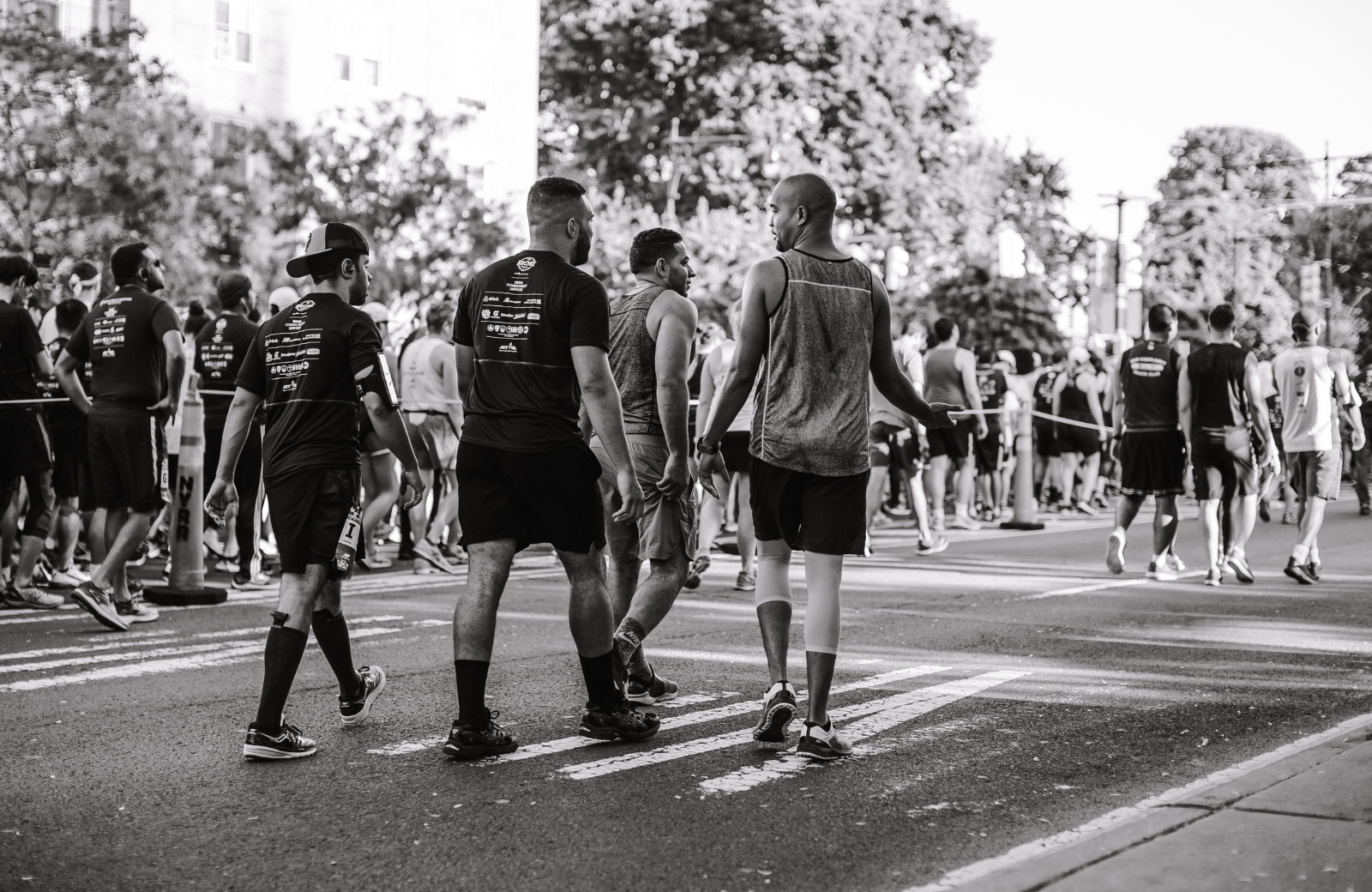
In the first 48 hours after a marathon, focus on fluids, food, gentle walking, and sleep. Skip anything hard and let your body start the repair work.
Refuel and Rehydrate
Eat a balanced meal with protein and carbohydrates soon after you finish. Keep sipping fluids over the next couple of days instead of chugging a gallon at the finish line.
Colorful fruits and vegetables, lean proteins, and whole grains give your body the raw materials it needs. This is not the week to cut calories.
Move, But Keep It Easy
A short walk the evening of the race usually helps more than a full day on the couch. Gentle movement pushes blood through tired muscles and eases stiffness.
Hold Off on Deep Massage
A firm sports massage right after the race can add to the muscle damage you already have. Wait two or three days, then choose a lighter session if you want one.
What About Ice and Pain Pills?
Ice can calm a sore spot for a few minutes, and that is fine. Be careful leaning on anti inflammatory pills, though. They can hide pain you need to notice while your body recovers.
When Can You Start Running Again After a Marathon?

Most runners can start easy running again five to fourteen days after a marathon. Walking and stairs should feel normal first. Your first runs should be short, slow, and a little boring on purpose.
Yale Medicine experts suggest many recreational runners take five to seven days off from running. They also advise keeping the first few runs very easy. Mayo Clinic recommends a one to two week break from running, with biking, walking, swimming, or the elliptical filling in.
A Sample Marathon Recovery Timeline
| Time After the Race | What Your Body Is Doing | What to Do | What to Skip |
|---|---|---|---|
| Days 1 to 2 | Peak soreness, low fuel, fluid loss | Walk, eat, hydrate, sleep | Running, deep massage, heavy lifting |
| Days 3 to 7 | Muscles repairing, immune system still low | Easy biking, swimming, walking, gentle mobility | Hard workouts and long runs |
| Week 2 | Soreness gone, deeper repair continues | Two to four short easy runs, light strength work | Speed work and races |
| Week 3 | Tissue capacity returning | Build easy mileage toward 50 to 70 percent of your peak | Long runs over 90 minutes |
| Week 4 and beyond | Ready to rebuild | Add strides, then one quality workout per week | Jumping straight into a new training block |
Treat this as a guide, not a rulebook. If a run leaves you limping or sore for days, take a step back on the timeline.
How to Tell You Are Ready
- You can walk down stairs without wincing.
- You wake up without stiffness that lasts more than a few minutes.
- Your resting heart rate is back near its normal range.
- Easy walks and bike rides feel smooth and pain free.
- You actually feel excited to run again.
What Are the Best Marathon Recovery Exercises?
The best marathon recovery exercises are low impact cardio, gentle mobility, and light strength work. They keep blood flowing and rebuild capacity without pounding your legs.
Low Impact Cardio
- Easy cycling on a trainer or flat road for 20 to 40 minutes.
- Swimming or pool running to move without any impact.
- Relaxed walks on soft surfaces, like the trails along the Poudre River.
- Short elliptical sessions at a conversational effort.
Mobility That Feels Good
Gentle hip, ankle, and calf mobility can help you feel less stiff. Keep it comfortable and skip aggressive stretching on muscles that are still very sore.
Think of mobility as moving your joints through their range, not forcing a stretch. Five to ten easy minutes a day is plenty.
Strength Work for Runners

Light strength work can return during week two for most runners. Start with body weight moves and keep the effort easy.
- Glute bridges for your hips and lower back.
- Calf raises on a step for your calves and Achilles.
- Supported split squats for your quads and glutes.
- Side planks for trunk control.
- Single leg balance holds for your feet and ankles.
As the weeks go on, we gradually load these moves so your tendons are ready for your next training block. Strength is one of the best tools you have to stay healthy over many seasons of running.
What Mistakes Slow Down Marathon Recovery?
The biggest marathon recovery mistakes are running hard too soon, ignoring pain, and starting a new plan right away. Each one can turn a great race into a long layoff.
Doing Too Much Too Soon
Your fitness does not vanish in two weeks. Losing a little sharpness is far better than losing two months to a stress injury.
Doing Absolutely Nothing
Total rest is not the answer either. Days on the couch can leave you stiffer and slower to bounce back than light, regular movement.
Trying Something Brand New
The weeks after a marathon are not the time to take up a new sport at full effort. Your running fitness does not transfer perfectly to a different activity, so ease in gradually.
Ignoring the Post Race Blues
Many runners feel flat or a little lost after months of structured training. That is normal, and setting a fun, low pressure goal can help you stay patient.
When Is Pain After a Marathon a Sign of Injury?
Pain after a marathon may be an injury when it is sharp, sits in one spot, or makes you limp. Pain that worsens with each run is another warning sign. General soreness in both legs that fades within a week is usually normal.
Normal Soreness or Possible Injury?
| Sign | Normal Soreness | Possible Injury |
|---|---|---|
| Location | Spread across big muscles in both legs | One spot, often a bone, joint, or tendon |
| Timing | Peaks in one to three days, then fades | Lingers or worsens after a week |
| How it feels | Dull, achy, tight | Sharp, pinpoint, or burning |
| Walking | Stiff but a normal stride | Limping or changing your stride |
| Swelling | Little to none | Visible swelling around a joint |
Common Injuries That Show Up After Race Day
- Bone stress injuries in the shin, foot, or hip.
- Achilles tendon pain and stiffness.
- Runner’s knee and pain around the kneecap.
- IT band irritation on the outside of the knee.
- Hamstring and calf strains.
Mayo Clinic advises getting checked if joint pain or swelling is not improving. The same goes for pain that makes you limp or compensate. Bone pain that wakes you up at night also needs a look sooner rather than later.
How Physical Therapy Helps After a Marathon
A running focused physical therapist can tell the difference between normal soreness and a true injury. Our running injury rehab looks at how you move and where you absorb load. Then we map out what your body needs to run safely again.
How Should You Plan Your Next Race After Marathon Recovery?
Plan your next race once you have run pain free for at least two weeks. Your easy runs should also feel normal again. Many coaches suggest waiting a few months before another all out marathon effort.
Look Back Before You Look Ahead
- What felt strong during the race?
- Where did you start to fade?
- Did any pain show up during training or late in the race?
- How well did your fueling and pacing plan work?
Build a Smarter Next Block
A running gait analysis and a targeted strength plan can fix the weak links that showed up late in the race. Small fixes now often lead to a stronger, healthier next marathon.
Frequently Asked Questions About Marathon Recovery
Is it OK to walk the day after a marathon?
Yes. An easy 15 to 30 minute walk usually helps sore legs feel better by boosting blood flow. Keep the pace relaxed and stop if you notice sharp pain.
How many rest days should you take after a marathon?
Most runners do well with five to seven days off from running, filled with easy walking, cycling, or swimming. Highly trained runners may return sooner, while first timers often benefit from a full week or more.
Why am I so tired days after a marathon?
Lingering fatigue is normal because your muscles, fuel stores, and immune system are still recovering. Prioritize sleep, steady meals, and easy movement, and the tired feeling usually lifts within one to two weeks.
Should I stretch after a marathon?
Gentle mobility can help you feel less stiff, but aggressive stretching on very sore muscles rarely helps. Keep movements comfortable and focus on easy range of motion for your hips, calves, and ankles.
Will I lose fitness during marathon recovery?
You lose very little aerobic fitness during two to three weeks of easy training. Taking time to recover protects that fitness by lowering your risk of an injury that could sideline you for months.
When should I see a physical therapist after a marathon?
See a physical therapist if pain lasts more than a week or sits in one spot. Pain that changes the way you walk or run also needs a look. Early care usually means a faster, simpler return to running.
How We Help Runners Recover After a Marathon in Fort Collins
One on One Care With a Doctor of Physical Therapy
Every visit is one on one with a Doctor of Physical Therapy who understands runners. We do not rush you through a crowded clinic or hand you a generic sheet of exercises.
Our 3 Step Recovery Method
Our 3 Step Recovery Method calms the pain, rebuilds your strength, and prepares you for the miles you love. You stay active the whole way, without relying on pills, surgery, or weeks of rest.
We Plan for Your Next Start Line
Whether you want a post race tune up or help with a nagging ache, we plan around your goals. Your race calendar shapes every step. Learn more about our running injury rehab in Fort Collins and how it keeps you training.
Schedule Your Free Discovery Call
Not sure if what you feel is normal soreness or something more? Book a Free Discovery Call and talk with our team about your race and your recovery.
Call us at (970) 500.3427 or reach our team through our contact page. Your next strong race starts with a smart recovery.