If your shoulder aches every time you serve or reach for an overhead, the short answer is that pickleball shoulder impingement is usually an overload problem, not a bad shoulder. The tissues under your shoulder get pinched when the rotator cuff and shoulder blade are not strong enough for the volume you are playing. Calm the irritation, build the right strength, and you keep playing.
Here is what to do today if your shoulder is flaring:
- Drop all-out overhead smashes and cut total court time for a couple of weeks
- Avoid the fast, high swings that reproduce the pinch, and use ice or heat for comfort
- Start rotator cuff and shoulder-blade strengthening in a pain-free range
- Warm up the mid-back and shoulders before you play, skip long static stretching
- Get sharp, worsening, or night pain assessed rather than pushing through it
Below, a Fort Collins physical therapist explains what is happening in your shoulder, why pickleball triggers it, and how to fix it without quitting the game.

What Pickleball Shoulder Impingement Actually Is
Shoulder impingement means the soft tissues, your rotator cuff tendons and the bursa, get crowded and irritated as you raise your arm. The space between the top of your arm bone and your shoulder blade narrows, and those tissues get pinched, producing a sharp, catching, or burning pain when you reach overhead or out to the side.
On the court you feel it during serves, overheads, and quick reactive reaches. If you also run, lift, or climb, that same shoulder pain can show up in overhead presses, pull-ups, or certain holds on the wall. It is not a sign your shoulder is failing, it is a sign it needs more support for the work you are asking of it.
Shoulder bugging you on the court? Call (970) 500-3427 or book a free Discovery Call and we will find the cause and build your plan.
Symptoms to Watch For
Impingement usually sneaks in as a nagging ache that slowly gets louder rather than a dramatic injury. Common signs include:
- Sharp or pinching pain in the front or side of the shoulder when you raise your arm
- A dull ache that lingers after you play or train
- Pain reaching behind your back for a seatbelt or jacket
- Discomfort lying on that shoulder at night
- Weakness or fatigue when you smash, serve, or press overhead
For runners, lifters, and climbers, it often shows up as overhead presses feeling sketchy, pull-ups lighting up the shoulder, or avoiding certain grips on the wall.
Why Pickleball Stresses the Shoulder
Pickleball looks friendly, but it asks for repeated fast, powerful swings, sudden reaches and lunges for dinks and volleys, and a lot of upper-body rotation at speed, often for long sessions. If you sit at a desk most of the day, your shoulders already live in a rounded, forward position, and then you ask them to perform like a power athlete.
When the rotator cuff and shoulder-blade muscles are not prepared for that, the joint muscles through anyway, and irritation builds. Risk climbs with a sudden jump into lots of pickleball, old shoulder issues never fully rehabbed, lots of pressing without enough pulling, and weekend-warrior intensity with little recovery.
How to Treat It Without Quitting the Game
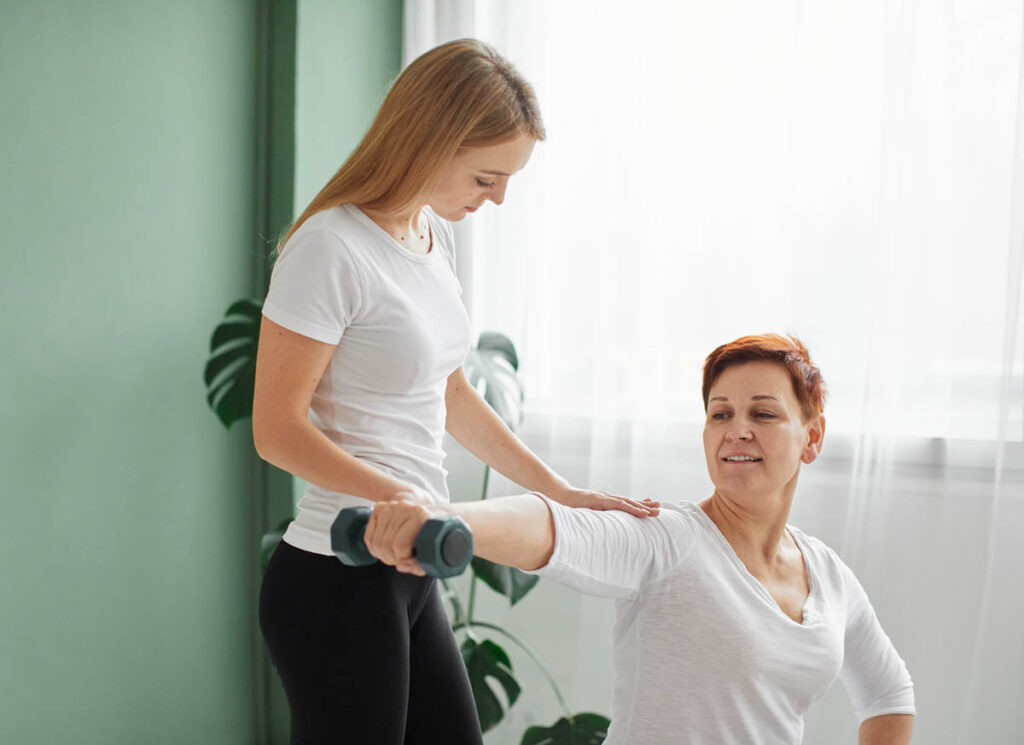
You rarely need to stop playing entirely, you need to respect the irritation and change how you load it. For the first couple of weeks, drop the all-out overheads, cut total games, avoid the fast high swings that hurt, and use ice or heat for comfort. Shift to lower shoulder load on strength days so the area settles while you stay active. Get help sooner if pain climbs every week, you lose power in the arm, or night pain wakes you, that pattern wants a targeted plan, not just more rest.
The Strength Work That Fixes It
Your shoulder responds to strength. Build the rotator cuff and shoulder blade so you can swing with confidence:
- Rotator cuff: banded external rotations with the elbow tucked, side-lying external rotation, and full-can raises within a pain-free range.
- Shoulder blade: rows that squeeze the blade back and down, banded wall slides, and prone Y and T raises with light weight.
- Posture and base: chest-supported rows, farmer and suitcase carries for stability under load, and hip hinges for a strong base under the upper body.
Start light with crisp form, then build toward heavier, more explosive work that looks like pickleball. Pair it with targeted mobility, thoracic rotation and gentle shoulder flexion before you play, and skip the long static stretching that leaves the joint loose but unstable.
Technique and Load: The Other Half
Small technique tweaks unload the shoulder: generate power from your legs and trunk so the arm finishes the motion instead of doing all the work, turn toward the ball rather than reaching across a twisted torso, and keep your feet active so you get into position instead of overreaching. Manage load too, do not spike weekly pickleball hours, avoid stacking new overhead lifting on top of more court time, and keep at least one day a week with no heavy shoulder work. Recovery, sleep, and protein matter as much as the exercises.
When It Is More Than Impingement
Most pickleball shoulder pain fits the overload story, but a few signs deserve a closer look: a sudden sharp injury with a pop followed by weakness, persistent night pain that does not improve with modification, a clear loss of motion compared to the other side, or numbness and tingling down the arm. These can involve a rotator cuff tear, labral injury, or nerve irritation, and they still often respond well to quality rehab, but they need a careful assessment first.

When to See a Physical Therapist
If your shoulder pain keeps climbing, robs your power, wakes you at night, or returns every time you play, it is time for a plan. At Up and Running Physical Therapy in Fort Collins, every session is one-on-one with a Doctor of Physical Therapy. Our 3-Step Recovery Method finds the real source, rebuilds rotator cuff and shoulder-blade strength, and future-proofs the shoulder so you stay on the court, without pills, surgery, or endless rest.
Frequently Asked Questions
What causes shoulder impingement from pickleball?
Repeated fast serves, overheads, and reaches overload a rotator cuff and shoulder blade that are not strong enough for that volume, narrowing the space under the shoulder and pinching the tendons. Desk posture, a sudden jump in play, and too much pressing without pulling all add to it.
Can I keep playing pickleball with shoulder impingement?
Usually yes, with modifications. Cut back overheads and total games for a couple of weeks, avoid the swings that sharply hurt, and start strengthening. If pain climbs weekly, robs your power, or wakes you at night, get it assessed before continuing.
How do I get rid of pickleball shoulder pain?
Calm the irritation by reducing aggravating load, then rebuild rotator cuff and shoulder-blade strength, clean up your swing mechanics, and manage how much you play. That combination resolves most cases, while rest alone tends to let it return.
What are the best exercises for shoulder impingement?
Banded external rotations, side-lying external rotation, rows, wall slides, and prone Y and T raises build the cuff and shoulder blade. Start light and pain-free, then progress the load as the shoulder tolerates it.
How long does pickleball shoulder impingement take to heal?
Many players feel meaningfully better in four to six weeks with load management and consistent strengthening. More irritable or long-standing shoulders take longer, especially if the strength and mechanics behind the problem are never addressed.
Should I stretch a shoulder with impingement?
Some targeted mobility helps, like thoracic rotation and gentle shoulder flexion, but avoid aggressive stretching into painful ranges or hanging through pain. Strength and control matter more than chasing extra range.
Play Pickleball Without Shoulder Pain
You do not have to trade your game for a sore shoulder. At Up and Running Physical Therapy in Fort Collins, we help pickleball players and active adults calm shoulder pain and rebuild the strength to swing with confidence, with one-on-one, performance-focused care.
Ready to get back on the court? Call (970) 500-3427 or book your free Discovery Call. Want to talk it through first? Speak with a PT and we will map out your plan.