ACL rehabilitation is about more than rebuilding muscle. It also involves how the nervous system processes sensation, plans movement, divides attention, and reacts when sport becomes unpredictable.
By Dr. Chandler Lockwood, PT, DPT, Up and Running Physical Therapy, Fort Collins, Colorado
If you have torn your ACL, you probably expect ACL rehabilitation to involve rebuilding strength: quadriceps, hamstrings, single-leg strength, jumping, running, and cutting. All of those things matter in the process of ACL rehabilitation.
But there is another part of ACL rehabilitation that athletes often never hear about. A knee injury may also change how the brain and nervous system organize movement.
In ACL rehabilitation, athletes must focus on both physical and mental aspects.
That was the focus of a recent Clinical Collective at Up and Running Physical Therapy in Fort Collins, led by physical therapist Dr. Chandler Lockwood. He opened the session with first-person footage of competitive soccer: players and the ball moving in every direction, space changing second by second, and decisions happening almost instantly.
Understanding ACL rehabilitation is crucial for a successful recovery.
His point was simple. A soccer player returning after ACL reconstruction does not only need a strong knee. They need a knee they can control while their brain is busy doing everything else.
Incorporating cognitive tasks can enhance ACL rehabilitation.
Basically, it takes more mental effort to do stuff.
Dr. Chandler Lockwood, PT, DPT
An ACL Injury Changes More Than the Knee
The ACL contributes more than mechanical stability. Sensory input from the knee helps the nervous system estimate joint position and movement. A meta-analysis found impaired proprioception in ACL-injured knees compared with the uninvolved side, though measurement methods and the clinical size of that difference vary. [1]
Proprioception is a key component in ACL rehabilitation.
New strategies in ACL rehabilitation can lead to improved outcomes.
Athletes must adapt their training during ACL rehabilitation.
Visual attention plays an important role in the context of ACL rehabilitation.
During ACL rehabilitation, it’s vital to maintain focus on visual cues.
Tests in ACL rehabilitation should reflect real-life conditions.
ACL rehabilitation requires a multidisciplinary approach to ensure success.
Researchers have also reported differences in brain activity and neural excitability after ACL injury or reconstruction. Reviews describe changes involving sensorimotor processing, motor planning, and the pathways that help activate the quadriceps. The findings are not uniform across every person or every study, but they support a practical idea: ACL recovery involves the nervous system as well as the knee. [2] [3]
This may help explain a familiar clinical pattern. An athlete can look strong and controlled during a planned exercise, then appear hesitant, stiff, slow, or less coordinated when the same movement must happen in response to an unexpected cue.
Why Visual Attention Matters After ACL Injury
Some athletes appear to rely more heavily on vision after ACL injury, using visual information to help organize posture and movement. A 2024 scoping review synthesized 23 studies and found the clearest evidence of increased visual reliance in ACL-deficient participants. Evidence after reconstruction was less consistent, and visual-cognitive loading was often more revealing than simply closing the eyes. [4]
That nuance matters. The research does not show that every athlete after ACL reconstruction is visually dependent. It suggests that testing under more realistic visual and cognitive demands may expose limitations that a quiet, predictable task misses.
In ACL rehabilitation, ensuring safety is paramount.
In soccer, vision is already occupied by defenders, teammates, the ball, boundaries, and open space. If more attention is needed to control the recovering leg, there may be less capacity available for the game itself.
The Goal: Make Movement Automatic Again
Early in ACL physical therapy, consciously thinking about movement can be useful. A clinician may teach an athlete to absorb force, regain knee motion, or perform a new exercise safely. Sport, however, does not allow time to micromanage every joint angle.
We have to get this to be automatic. We have to get it there able to do this without thinking about it at all.
Dr. Chandler Lockwood, PT, DPT
For late-stage ACL rehabilitation, the target is not simply a technically perfect cut when the athlete knows exactly what is coming. It is the ability to cut while reading another player, land while tracking the ball, and redirect when the next move is unknown.
Why Traditional Return-to-Sport Testing May Not Tell the Whole Story
Strength tests, hop tests, movement-quality measures, and psychological readiness are all useful parts of a return-to-sport decision. Current rehabilitation guidance supports a criteria-based process rather than clearance based on time alone. [5]
The limitation is ecological. A standard hop test asks how well someone can hop when hopping is the main task. Most sports require the athlete to move while perceiving, deciding, remembering, inhibiting one response, and selecting another.
In a 2025 study of 40 athletes after ACL reconstruction, adding secondary cognitive tasks to drop vertical jumps changed trunk and lower-extremity mechanics. Landings became more upright and stiff, and participants unloaded the reconstructed limb more. The study does not establish a new universal clearance test, but it shows why cognitive loading can reveal a different movement strategy. [6]
Clinical takeaway: Neurocognitive tasks should complement, not replace, strength testing, hop testing, movement assessment, symptom response, sport exposure, and psychological-readiness measures.
What Neurocognitive ACL Rehabilitation Can Look Like
Neurocognitive rehabilitation does not require elaborate technology. Its purpose is to challenge attention, perception, decision-making, or memory while the athlete moves. The best task is the one that answers a clinical question and matches the athlete’s current capacity.
1. Reactive and decision-based drills
During the Clinical Collective, Chandler placed different colored cones around an athlete. First, the athlete moved through a known sequence. Then the colors were called in an unpredictable order.
“When we went in order and he could expect where to go, looked really good.
Dr. Chandler Lockwood, PT, DPT
Once we changed the order of what we were doing, you could see there was that little bit of a delay.”
The athlete’s strength had not changed. The information-processing demand had.
Progressions might include later cues, more response options, a sequence to remember, a ball-handling task, a change in orientation, or a more sport-like environment.
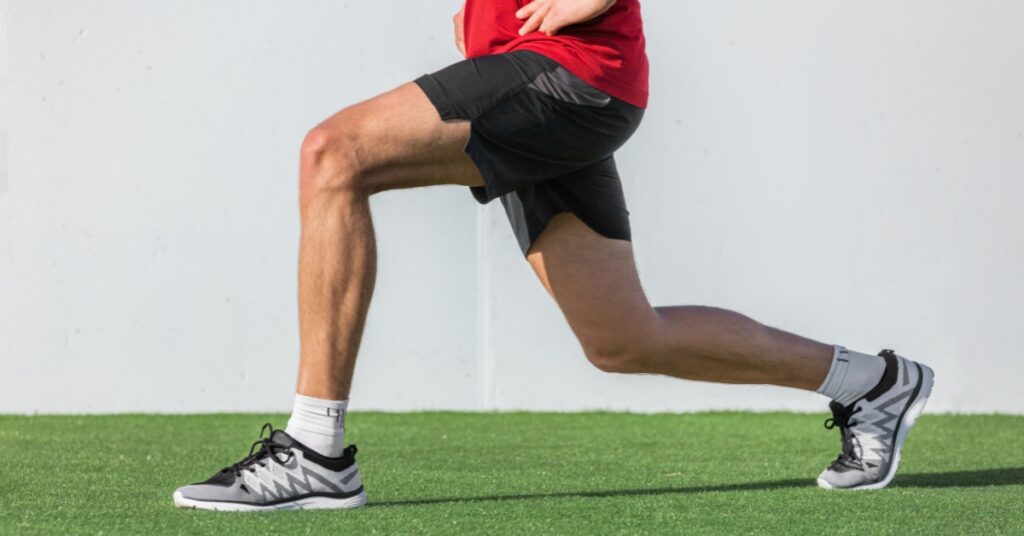
If you are working through ACL rehabilitation and want a plan that trains the knee and the system that controls it, our team can help.
Up and Running Physical Therapy uses a 3-Step Recovery Method to find the true source of the problem, rebuild strength and control, and return you to the sport you love with confidence. Call (970) 500-3427 to schedule a visit.
2. Cognitive-motor dual tasks
A dual task combines movement with another job. Examples include:
- balancing while counting backward or naming items in a category
- catching or passing a ball during a single-leg task
- remembering a short sequence while moving between targets
- reacting to a late left-or-right cue during change of direction
- tracking an object or opponent while landing or decelerating
The cognitive task is not magical, and more complexity is not automatically better. It simply requires the nervous system to divide attention in a way that is closer to sport.
3. External-focus coaching
An internal-focus cue directs attention to a body part, for example, keep your knee from collapsing inward. An external-focus cue directs attention to the intended effect, for example, push the ground away, or land quietly.
A large systematic review and meta-analysis found that external-focus instructions generally improved motor performance and learning compared with internal-focus instructions across diverse tasks and populations. That does not mean internal cues are never appropriate. It means clinicians can deliberately choose cues that encourage adaptable, less consciously controlled movement when the goal is sport transfer. [7]
The Environment Is Part of the Exercise
An athlete may perform differently alone than while being watched, in a quiet treatment room than in an open gym, or in the clinic than on the field. Noise, movement around the athlete, fatigue, time pressure, opponents, and evaluation all compete for attention.
That makes the environment a legitimate progression variable.
A return to soccer, basketball, volleyball, trail running, or another dynamic sport can move from predictable clinic tasks to increasingly representative situations rather than jumping directly into unrestricted competition.
How Neurocognitive Work Fits Into a Return-to-Sport Plan
A practical progression keeps the physical demand appropriate while changing one information-processing variable at a time:
- Build the base: restore motion, manage symptoms, and develop strength and power.
- Add controlled decisions: introduce simple cues or a low-load secondary task.
- Reduce predictability: vary direction, timing, or the number of response options.
- Increase sport relevance: add equipment, teammates, opponents, or a busier setting.
- Test under the right conditions: use fatigue or pressure only when it reflects the athlete’s actual problem and is safe to reproduce.
Safety remains the anchor. Heavy loaded exercises with the eyes closed, high-speed cutting before adequate physical capacity, or multiple new variables introduced at once can add risk without adding useful information.
The challenge should be difficult enough to create learning, but not so difficult that the athlete repeatedly fails or feels threatened.
Psychological Readiness Belongs in the Conversation
An athlete can meet physical benchmarks and still report that they do not trust the leg, or that they think about the knee every time they move. Those statements are clinically meaningful.
A meta-analysis of 3,744 patients found that people who returned to sport after primary ACL reconstruction had higher psychological readiness and self-efficacy and lower kinesiophobia than those who did not, despite similar knee-function scores. [8]
Psychological readiness should not be used in isolation, but it should not be ignored. The goal is not only for the knee to tolerate sport. It is for the athlete to move freely enough that the knee no longer occupies most of their attention.
What the Evidence Can and Cannot Tell Us
The evidence for neural changes after ACL injury is compelling but still developing. Studies use different imaging methods, tasks, time points, surgeries, and comparison groups.
Some findings are inconsistent, and many rehabilitation recommendations are based on mechanistic research, small studies, or expert clinical reasoning rather than trials proving fewer reinjuries. [2] [4]
The responsible conclusion is not that neurocognitive drills are a cure or that traditional ACL rehabilitation is obsolete. It is that strength and tissue capacity are necessary, while representative decision-making, attention, movement automaticity, and psychological readiness may help make late-stage rehabilitation more complete.
Questions to Ask During ACL Rehabilitation
Consider discussing these questions with your physical therapist or sports-medicine team:
- Am I being assessed with a full test battery rather than time or limb symmetry alone?
- Can I maintain movement quality when I must react or divide my attention?
- Does my rehabilitation gradually introduce unpredictable, sport-relevant situations?
- How are confidence, fear of reinjury, and psychological readiness being monitored?
- What criteria must I meet before progressing to practice and unrestricted competition?
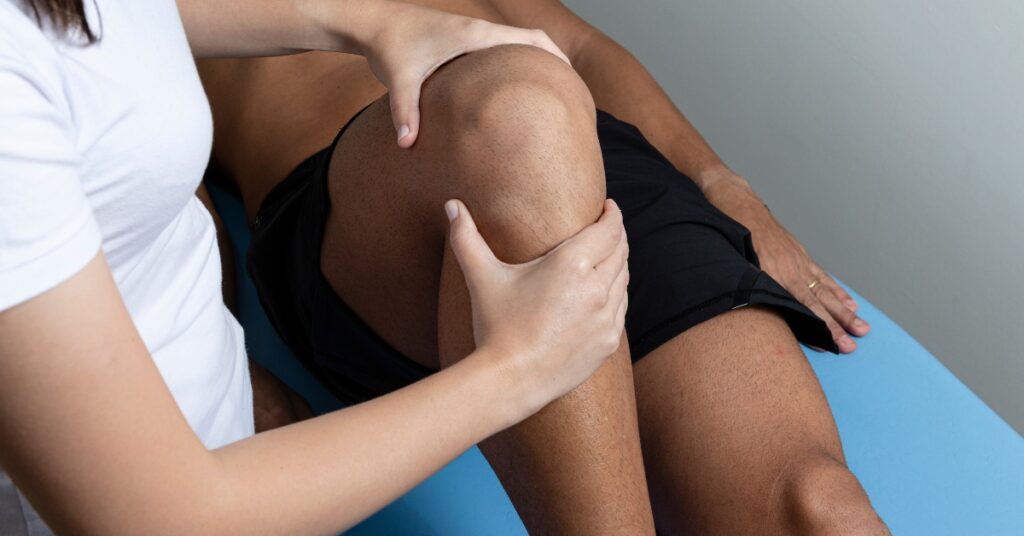
The Bottom Line
A successful return to sport requires more than a strong leg. The athlete must perceive, decide, react, and move while the environment keeps changing. Neurocognitive rehabilitation gives clinicians another way to bridge the gap between controlled physical therapy and the uncertainty of real sport.
The aim is not to make rehabilitation complicated. It is to make it representative:
Rebuild the knee
Retrain the system that controls it
Help the athlete trust both under the demands that matter
Work With a Fort Collins Sports Physical Therapist
If you are working through ACL rehabilitation and want a plan that trains the knee and the system that controls it, our team can help.
Up and Running Physical Therapy uses a 3-Step Recovery Method to find the true source of the problem, rebuild strength and control, and return you to the sport you love with confidence. Call (970) 500-3427 to schedule a visit.
About the Author
Dr. Chandler Lockwood, PT, DPT, is a physical therapist with Up and Running Physical Therapy in Fort Collins, Colorado. He led the Clinical Collective session that informed this article, sharing practical ways clinicians can consider cortical and neurocognitive demands during rehabilitation and return-to-sport preparation.
Ultimately, ACL rehabilitation aims to empower the athlete.
Collaborative efforts enhance the effectiveness of ACL rehabilitation.
Medical Disclaimer
This article is for general educational purposes only and does not constitute medical advice, diagnosis, or treatment. ACL injuries and recovery timelines vary. Decisions about surgery, rehabilitation progression, testing, and return to sport should be made with a qualified healthcare professional who can evaluate the individual’s history, symptoms, examination findings, and sport demands.
References
- Kim H-J, Lee J-H, Lee D-H. Proprioception in Patients With Anterior Cruciate Ligament Tears: A Meta-analysis Comparing Injured and Uninjured Limbs. American Journal of Sports Medicine. 2017;45(12):2916-2922. doi:10.1177/0363546516682231
- Neto T, Sayer T, Theisen D, Mierau A. Functional Brain Plasticity Associated with ACL Injury: A Scoping Review of Current Evidence. Neural Plasticity. 2019;2019:3480512. doi:10.1155/2019/3480512
- Rodriguez KM, Palmieri-Smith RM, Krishnan C. How does anterior cruciate ligament reconstruction affect the functioning of the brain and spinal cord? A systematic review with meta-analysis. Journal of Sport and Health Science. 2021;10(2):172-181. doi:10.1016/j.jshs.2020.07.005
- Tortoli E, Gokeler A, Tak I, Pellicciari L, Norte G. Is Visual Reliance Increased in Athletes After ACL Injury? A Scoping Review. Sports Medicine. 2024;54(10):2531-2556. doi:10.1007/s40279-024-02085-2
- Kotsifaki R, Korakakis V, King E, et al. Aspetar clinical practice guideline on rehabilitation after anterior cruciate ligament reconstruction. British Journal of Sports Medicine. 2023;57(9):500-514. doi:10.1136/bjsports-2022-106158
- Strong A, Markstrom JL. Adding secondary cognitive tasks to drop vertical jumps alters the landing mechanics of athletes with anterior cruciate ligament reconstruction. Journal of Biomechanics. 2025;180:112496. doi:10.1016/j.jbiomech.2025.112496
- Chua L-K, Jimenez-Diaz J, Lewthwaite R, Kim T, Wulf G. Superiority of external attentional focus for motor performance and learning: Systematic reviews and meta-analyses. Psychological Bulletin. 2021;147(6):618-645. doi:10.1037/bul0000335
- Xiao M, et al. Patients Who Return to Sport After Primary Anterior Cruciate Ligament Reconstruction Have Significantly Higher Psychological Readiness: A Systematic Review and Meta-analysis of 3744 Patients. American Journal of Sports Medicine. 2023;51(10):2774-2783. doi:10.1177/03635465221102420
Consider a tailored approach to ACL rehabilitation for better results.
Consistent evaluation during ACL rehabilitation is essential for progress.