Kegel exercises are not the right solution for everyone, especially if your pelvic floor muscles are already too tight. In some cases, repeatedly squeezing tense muscles can increase pelvic pain, urinary symptoms, and muscle dysfunction instead of improving them. For many active adults, the first step toward recovery is learning how to relax and lengthen the pelvic floor through targeted stretches and breathing techniques. This guide shares pelvic floor stretches recommended by pelvic floor physical therapists to help reduce tension, improve mobility, and restore healthy muscle function.
Key Takeaways:
- Kegels are not appropriate for every type of pelvic floor dysfunction.
- Tight pelvic floor muscles often benefit from stretching before strengthening.
- Pelvic floor stretches can help reduce pain, tension, and urinary symptoms.
- Diaphragmatic breathing supports pelvic floor relaxation and coordination.
- A pelvic floor physical therapist can determine the right treatment approach.
12 Pelvic Floor Muscle Stretches Recommended By Pelvic Floor Physical Therapists
Why Stretching Matters for Active Adults
If you’re running along the Poudre Trail, crushing workouts at Altitude Running, or logging hours at the gym, your pelvic floor muscles are working harder than you think.
They stabilize your pelvis, support your pelvic organs, and control your breathing and core strength during every lift, stride, and jump.
When these muscles get too tight, you may notice pelvic pain, hip tension, or urinary incontinence during activity.
These pelvic floor stretches help relax pelvic floor muscles, restore mobility, and improve performance. They’re especially helpful if you’ve been doing Kegel exercises and things feel worse instead of better.
1. Child’s Pose
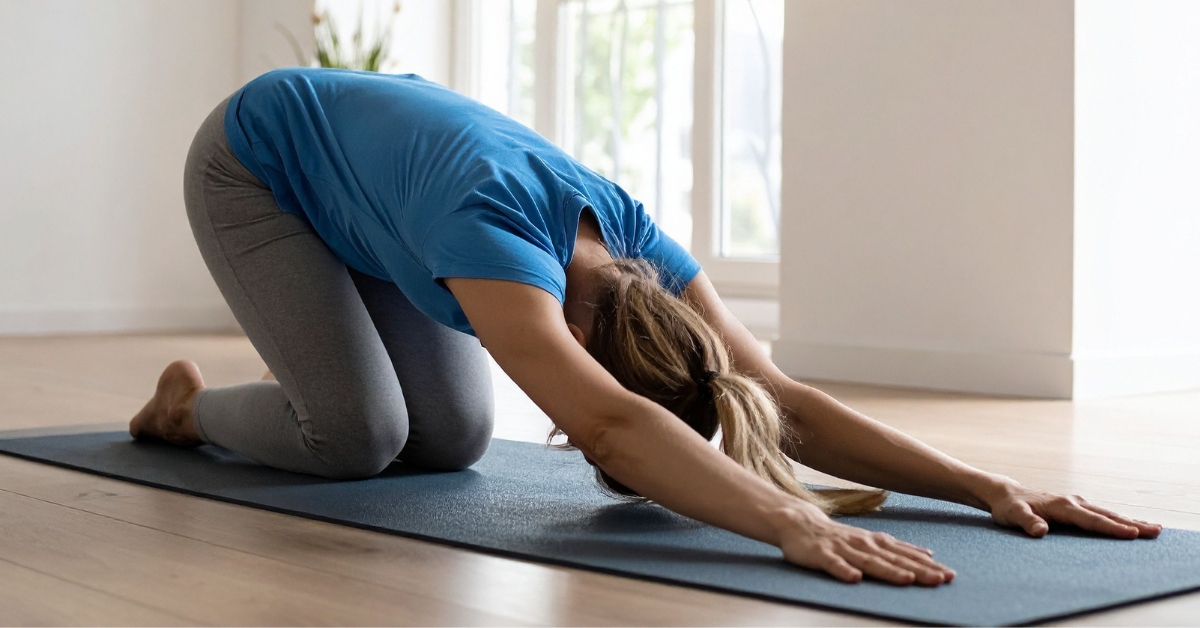
Start on your hands and knees with your knees bent and feet flat behind you. Lower your hips back toward your heels and breathe deeply into your belly. You should feel your pelvic muscles relax as your torso sinks forward.
Focus on practicing diaphragmatic breathing here. With each inhale, let your belly expand. This helps calm a hypertonic pelvic floor and releases tension in the pubic bone and inner thighs.
2. Happy Baby
Lie on your back, bring your knees bent toward your chest, and hold your feet with your hands. Let your pelvis sink into the floor and breathe deeply to relax your pelvic floor muscles.
This stretch targets tight pelvic floor muscles and helps improve bladder control and bowel movement coordination. Try holding for 60 seconds while focusing on gentle belly breathing.
When your pelvic floor moves well, everything else follows. Let’s rebuild your foundation together.
Get in touch today with our Fort Collins Pelvic Health Team at (970) 500-3427 and take the first step toward lasting strength and wellness.
3. Supported Deep Squat
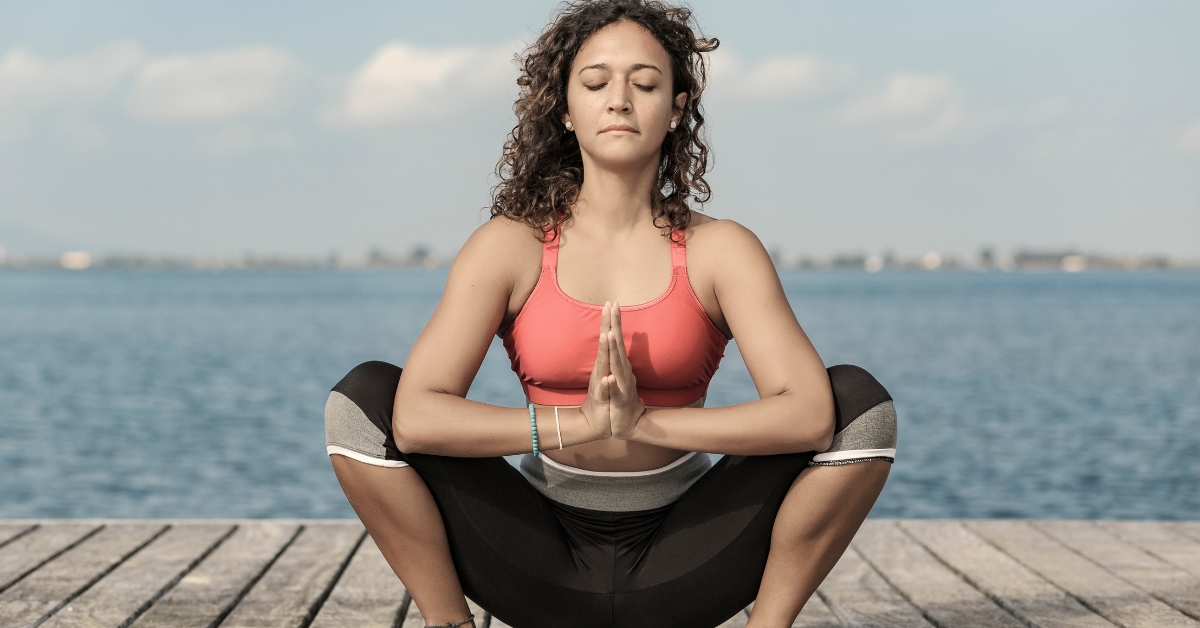
Stand with your feet flat and wider than shoulder-width apart. Lower into a squat and rest your elbows on your inner thighs. Keep your heels down. You can hold onto a sturdy object like a squat rack for support.
This pelvic floor exercise lengthens the pelvic muscles while improving hip mobility. It’s perfect for athletes preparing for heavy lifting or long runs in Fort Collins’ City Park 10K events.
4. Supine Butterfly Stretch
Lie on your back with your knees bent and the soles of your feet touching. Let your legs fall open and breathe into your pelvic area.
This position allows the pelvic floor and core muscles to fully release. It’s a gentle way to calm tense pelvic floor muscles before bedtime or after training.
5. Seated Pelvic Tilt
Sit on the edge of a sturdy chair with your feet flat and hands on your hips. Slowly tilt your pelvis forward and back.
This improves awareness of your pelvic floor muscle movement and helps retrain coordination with your core muscles. It’s great for anyone who sits long hours at a computer screen or experiences pelvic floor dysfunction from posture habits.
6. Deep Breathing in 90/90 Position
Lie on your back, place your legs on a chair so your knees are bent at 90 degrees, and breathe deeply into your belly. Feel your ribs expand and your pelvic floor relax.
This simple diaphragmatic breathing exercise releases pelvic floor muscle tension and teaches you how to connect your breathing to your pelvic movement.
7. Kneeling Hip Flexor Stretch
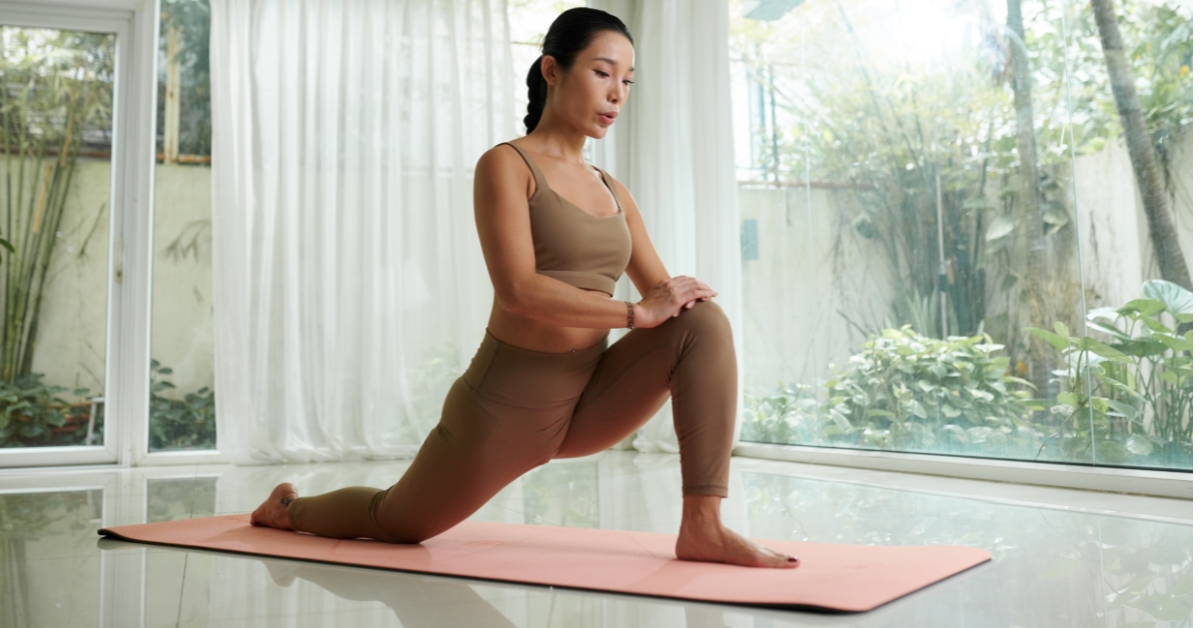
Kneel with your right leg forward, left knee on the floor. Gently shift your hips forward until you feel a stretch through the front of your left leg and pelvic area.
This stretch targets nearby muscles that often pull on the pelvis, creating tight pelvic floor sensations. It’s essential for runners and cyclists who overuse their hip flexors to add this one to their pelvic floor stretches.
8. Figure Four Stretch
Lie on your back, cross your right leg over your left thigh, and pull your legs toward your chest. You’ll feel the stretch through your hips and pelvic floor.
This helps release the tense muscles that connect your hips and pelvic floor, improving blood flow and sexual function.
9. Supported Bridge with Breathing
Lie on your back, place a yoga block or cushion under your pelvis, and let your hips open. Breathe deeply and imagine the base of your pelvic floor expanding with each inhale.
This position gently decompresses the pelvic organs and improves circulation. It’s one of the ideal pelvic floor stretches for athletes dealing with mild pelvic floor hypertonicity or fatigue from repetitive training.
10. Reclined Hamstring Stretch
Lie on your back and lift one leg toward the ceiling, keeping the other bent. Hold behind your thigh and flex your foot.
This movement releases tension through your pelvic muscles and hamstrings, which often tighten together. Balanced flexibility in these areas helps prevent pelvic floor problems during performance training.
11. Side-Lying Adductor Stretch
Lie on your side with your top leg extended forward and heel resting on the floor. You’ll feel the stretch along your inner thighs and pelvic muscles.
This is one of the best pelvic floor stretches for runners who struggle with groin or pelvic pain after long distances on trails like Lory State Park.
12. Diaphragmatic Breathing in Child’s Pose
Return to child’s pose and focus only on breathing. Place one hand on your belly and one on your pelvic floor. As you inhale, feel your belly and pelvic floor expand. As you exhale, let them gently rise.
Practicing this regularly helps the pelvic floor function properly and prevents over-reliance on Kegel exercises that can tighten already hypertonic pelvic floor muscles.
Rebuild Balance. Restore Performance.
If your pelvic floor feels tight or unresponsive, it’s not weakness—it’s imbalance. These pelvic floor stretching exercises help you restore mobility, reduce pain, and reconnect to your body’s natural strength.
When pelvic floor stretches alone aren’t enough, pelvic floor physical therapy can help you uncover what’s causing your tightness and create a treatment plan designed for your sport, your lifestyle, and your goals.
Call (970) 500-3427 today to start your recovery and get back to the activities you love—stronger, looser, and more confident in every movement.

Restoring Strength and Flexibility Through Pelvic Floor Physical Therapy
Why Strength and Stretching Work Best Together
When your pelvic floor muscles stay tight, every movement feels harder than it should. You might notice discomfort during workouts, soreness after long runs, or even pelvic pain that doesn’t go away with stretching alone. That’s because tight muscles can’t generate true strength or control.
At our clinic, we use a performance-based approach that blends pelvic floor stretches with functional pelvic floor exercises to retrain your body from the inside out. Our goal is to help you move naturally, lift safely, and breathe efficiently during every activity—from training at Altitude Running to hiking the Horsetooth Falls Trail.
What a Personalized Plan Looks Like
Every treatment plan starts with a one-on-one physical exam focused on your movement patterns, posture, and breathing. We look at how your pelvis, hips, and core muscles coordinate during activity. This helps us find where your pelvic floor dysfunction starts and how to correct it.
We design an individualized plan that may include:
- Manual therapy and soft tissue mobilization to release restricted areas
- Pelvic floor stretches and movement retraining to improve control
- Diaphragmatic breathing to help your pelvic muscles relax and function properly
- Progressive strengthening to prevent future tension or instability
- Coaching on lifestyle adjustments that support long-term pelvic health
Each session focuses on restoring your balance, improving mobility, and giving you the confidence to return to high-level activity without pain or fear of relapse.
Your Recovery, Your Performance
You deserve to train, move, and live without discomfort holding you back. Our pelvic floor physical therapists guide you through every phase of recovery so your body can perform at its best—whether that’s running the Fort Collins Marathon, lifting at the gym, or chasing your kids around Spring Canyon Park.
When your pelvic floor moves well, everything else follows. Let’s rebuild your foundation together.
Get in touch today with our Fort Collins Pelvic Health Team at (970) 500-3427 and take the first step toward lasting strength and wellness.
Pelvic Floor Stretches FAQs
Should I stop doing Kegels if they make my symptoms worse?
If Kegel exercises increase your pain, pelvic pressure, or urinary symptoms, your pelvic floor muscles may already be too tight. A pelvic floor physical therapist can determine whether your muscles need relaxation, stretching, strengthening, or a combination of treatments.
How do I know if my pelvic floor muscles are too tight?
Common signs of a tight pelvic floor include pelvic pain, painful intercourse, constipation, urinary urgency, difficulty fully emptying the bladder, or discomfort while sitting. A pelvic floor evaluation can identify whether muscle tension is contributing to your symptoms.
Can pelvic floor stretches replace Kegel exercises?
Not always. Pelvic floor stretches help relax tight muscles, while Kegel exercises strengthen weak muscles. The right approach depends on your specific pelvic floor condition, which is why an individual assessment is important.
How often should I do pelvic floor stretches?
Many pelvic floor stretches can be performed daily, especially when combined with slow diaphragmatic breathing. Your physical therapist can recommend the most appropriate routine based on your symptoms, activity level, and treatment goals.
When should I see a pelvic floor physical therapist?
You should consider seeing a pelvic floor physical therapist if you have ongoing pelvic pain, urinary leakage, pelvic pressure, constipation, or symptoms that do not improve with home exercises. A personalized evaluation can help identify the underlying cause and guide the most effective treatment plan.