Runner’s knee rehabilitation exercises can feel confusing when all you want is to get back to pain free miles. You rest, ice, scroll the internet for answers, then your knee flares the second you try to run or lift again.
If that sounds familiar, you are not broken and you are not alone. Active adults and athletes deal with this type of nagging knee pain all the time, especially when training gets serious or life gets busy.
What you do next matters more than how bad your knee feels today. Runner’s knee is usually a problem with how your body loads and controls the knee, not a simple issue that rest alone fixes.
With the right exercises, you can rebuild strength, control, and confidence so your knee handles the miles, workouts, and weekend adventures you care about. In this guide, we walk through what runner’s knee actually is, why it shows up, and the specific rehab progressions that help you move and train without fear of every step.
Understanding Runner’s Knee Before You Start Rehab
Progress comes faster when you understand what is going on in your knee. A few minutes of clarity now can save you months of frustration later.
Runner’s knee, often called patellofemoral pain, describes irritation around or behind the kneecap. It usually develops from repeated loading rather than one dramatic injury.
Common Symptoms Of Runner’s Knee In Runners And Active Adults
Runner’s knee usually feels like a dull, aching pain around or behind your kneecap. Typical times you might feel it include:
- When you go down stairs more than up
- When you squat, lunge, or sit for a long time
- During or after runs, especially with hills or speed work
- When you hike downhill or do a lot of braking on the bike
The pain can feel sharp when you bend and load the knee. It may calm down once you warm up, then return later that day or the next morning.
What Actually Causes Runner’s Knee
Runner’s knee usually comes from how your body loads the kneecap over and over. The knee ends up taking the hit for problems that often start at the hip, ankle, or in your training plan.
Common causes include:
- Training spikes
- Big jumps in weekly mileage
- Adding hills or speed too quickly
- Too many hard days in a row without recovery
- Weak or unde=ractive hips and glutes
- Poor control of thigh position when you land or push off
- Knee caves inward with squats, lunges, or single leg work
- Mobility limitations
- Stiff ankles that force the knee to move more
- Tight quads or hip flexors that pull on the kneecap
- Technique and equipment
- Overstriding when you run
- Old or poorly matched shoes
- Lots of running on very hard or very uneven surfaces
The key idea is that you do not have a bad knee. You have a knee that absorbs stress your hips, ankles, and training plan do not manage well yet.
When Home Exercises Are Enough And When To See A Professional
Not every sore knee needs a clinic visit on day one. Some situations do need a medical check right away.
You should get evaluated quickly if you notice:
- A knee that locks and will not straighten or bend fully
- A big, sudden swell after a fall or twist
- Sharp pain that stops you mid step and does not ease up
- A sense that the knee keeps giving out under you
Home rehab is often reasonable if your pain feels more like a dull ache or mild sharpness with loading. The knee should still move fully, even if it feels stiff, and pain should ease with rest but return with specific activities.
If you keep trying to push through pain and hope it disappears, you often train your brain to fear movement. A planned reset with smart runner’s knee rehabilitation exercises helps you move from hoping it holds to trusting your knee again.
If you feel stuck in a cycle of flare ups, you do not have to figure this out alone. Up and Running Physical Therapy offers a Free Discovery Call with a Doctor of Physical Therapy so you can talk through your history, goals, and next best steps.
During that call, you can share what you have already tried, ask questions, and see whether this performance focused approach fits your needs. To schedule your Discovery Call or an in person evaluation, call (970) 500 3427 and the team will help you move toward pain free, confident miles again.
Foundational Runner’s Knee Rehabilitation Exercises
Progress with runner’s knee comes from the right exercises done consistently, not from random moves pulled from social media. Think of this as a progression that builds a stronger system from hips to feet.
Good rehab programs share a few simple principles. They respect pain, build strength gradually, and match your current level, not someone else’s highlight reel.
Key Principles Before You Start
A little discomfort is normal when you rehab an irritated joint. The goal is tolerable and improving, not zero sensation at all times.
Use these simple rules:
- During exercise, keep pain at or below a 3 out of 10
- Any increase in pain should calm back down within 24 hours
- If pain spikes above that, scale back load, depth, or volume
Most people do well with strength work three to four days per week. Aim for two to four sets per exercise, with eight to twelve controlled repetitions or twenty to forty five second holds for isometrics.
You can progress by increasing range of motion, adding load with bands or weights, increasing time under tension, or moving toward more single leg and dynamic control. Small changes over time add up.
Step 1 Activate And Strengthen Your Hips And Glutes
Your hips are your power center. When they do not control your thigh, your knee often drifts inward and your kneecap tracks poorly.
Starting with simple glute and hip exercises helps your body learn better alignment. These moves are usually friendly even when the knee feels sensitive.
Good starter exercises include:
Clamshells
- Lie on your side with hips and knees bent.
- Keep feet together and open your top knee without rolling your pelvis.
- Perform two to three sets of twelve to fifteen repetitions per side.
Sidelying hip abduction
- Lie on your side with your bottom knee bent and top leg straight.
- Lift the top leg straight up slightly behind your body, then lower with control.
- Perform two to three sets of ten to fifteen repetitions per side.
Glute bridges
- Lie on your back, knees bent, feet flat.
- Squeeze your glutes and lift your hips until your body forms a straight line from shoulders to knees.
- Perform two to three sets of ten to fifteen repetitions, and progress to single leg bridging when this feels easy.
Monster walks or lateral band walks
- Place a light band around your ankles or just above your knees.
- Take a slight squat position, knees in line with toes, then step sideways against band tension.
- Complete two to three laps of ten to fifteen steps each direction.
The goal is to feel these primarily in your side hips and glutes, not in your low back. If your back takes over, reduce band tension or limit range of motion.
Step 2 Build Quad Strength Without Flaring Up Your Knee
Your quads guide the kneecap and absorb impact with each step, pedal stroke, or landing. Weak or deconditioned quads shift stress to sensitive structures in the front of the knee.
The trick is to load the muscle without creating so much knee irritation that you cannot stay consistent. Joint friendly options can help.
Helpful exercises include:
Wall sits
- Stand with your back against a wall, feet slightly out.
- Slide down into a mini or mid squat and hold.
- Aim for twenty to forty five seconds, two to four sets.
Spanish squat holds
- Anchor a thick strap or band around a solid object at knee height.
- Step into the loop behind both knees, lean back, and sit into a squat with a vertical shin.
- Hold for twenty to forty five seconds, two to four sets.
Short arc quads or terminal knee extensions
- For short arc quads, lie or sit with a rolled towel under your knee and straighten the leg.
- For terminal knee extensions, stand with a band behind your knee and gently straighten it against resistance.
- Perform two to three sets of twelve to fifteen repetitions.
Step ups to a low box
- Use a step or low box that feels comfortable on your knee.
- Step up with control, push through the whole foot, then step down slowly.
- Perform two to three sets of eight to ten repetitions per side.
Over time you can raise the step, add dumbbells, or slow the lowering phase as your knee calms and quad strength builds.
Step 3 Improve Single Leg Control And Balance
Running, hiking, and many gym exercises are essentially a series of single leg tasks. Your knee needs to track well when you land, push off, twist, or change direction.
Single leg drills train your brain and muscles to coordinate under load. That neuromuscular control protects your knee when your pace picks up or the trail gets uneven.
Effective single leg exercises include:
Single leg Romanian deadlift
- Stand tall on one leg with a slight knee bend.
- Hinge at the hip, reach the opposite leg back, and keep your back flat.
- Think about sending your hips back, not bending your spine.
- Perform two to three sets of eight to ten repetitions per side.
Supported single leg squat to a box or chair
- Stand on one leg in front of a box or chair.
- Lightly hold a counter or rail for balance if needed.
- Sit your hips back and down until you touch the box, then stand up under control.
- Perform two to three sets of six to eight repetitions per side.
Skater taps or clock reaches
- Stand on one leg.
- Gently reach the other leg out to different clock positions without losing balance or letting the knee cave inward.
- Perform two to three sets of six to eight controlled reaches per direction.
The focus should be on slow, controlled movement and steady alignment of the knee over the middle of the foot. Quality matters more than quantity here.
Step 4 Add Functional And Sport Specific Movements
Once your knee tolerates basic strength work and single leg control, you can begin to move closer to the demands of your sport. This phase prepares your knee for real impact and real life.
Before you add more dynamic moves, your pain should stay low and predictable with earlier phases, and you should not see noticeable swelling the day after workouts. You also want confident single leg balance without major wobbling.
Helpful progressions include:
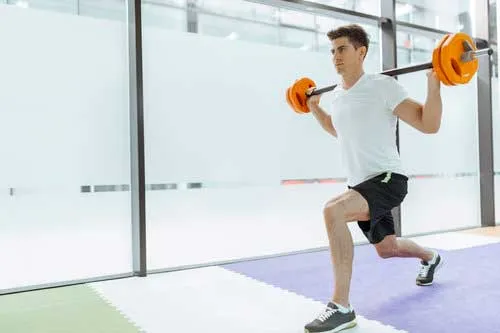
Reverse and lateral lunges
- Step back or to the side instead of forward to reduce stress on the front of the knee.
- Keep your knee tracking over the middle of your foot.
- Perform two to three sets of eight to ten repetitions per side.
Step downs
- Stand on a low step.
- Slowly bend the stance leg and lower the opposite heel toward the ground, then come back up.
- Start with a short range, then increase depth as control improves.
- Perform two to three sets of six to eight repetitions per side.
Low impact plyometrics
- Begin with small in place pogo jumps on two legs.
- Progress to gentle line hops front to back and side to side.
- Later, introduce single leg hops or bounds if your knee tolerates impact.
- Keep contacts quick and light, with two to three sets of ten to twenty contacts.
These movements bridge the gap between strength work and the demands of running, climbing, or intense gym sessions. The idea is that your first day back on the trail or track feels like a smooth next step, not a shock to the system.
Mobility, Form, And Training Tweaks That Protect Your Knees
Strength is a major piece of runner’s knee rehab, but it is not the only factor. The way your joints move, your form, and your training choices also shape how your knee feels.
Small adjustments often make a bigger difference than dramatic changes. The goal is to reduce unnecessary stress on the kneecap while you build a stronger base.
Mobility Work That Actually Helps Runner’s Knee
You do not need to stretch everything. You do want to focus on the areas that commonly get stiff in active adults and athletes.
Helpful mobility work includes:
Half kneeling hip flexor stretch
- Kneel on one knee with the other foot in front.
- Gently shift your hips forward until you feel a stretch in the front of your hip and thigh.
- Hold twenty to thirty seconds, two to three times per side.
Standing calf stretch and soleus stretch
- For the calf, lean into a wall with your back heel down and knee straight.
- For the soleus, bend the back knee slightly while keeping the heel down.
- Hold twenty to thirty seconds each, two to three rounds per side.
Foam rolling quads and lateral thigh
- Lie face down to roll the front of your thigh.
- Turn slightly to the side to roll the outer thigh region.
- Move slowly and breathe for thirty to sixty seconds per area.
The goal is to gain comfortable motion, not to grind tissues. Slight discomfort is acceptable, but sharp or burning pain is a signal to ease up.
Running Form And Footwear Adjustments
A complete form overhaul is rarely necessary. Simple tweaks can reduce stress on the front of your knee without changing your running style completely.
Useful form concepts include:
- Slightly shorter stride with a higher cadence
- Landing with your foot closer under your body, not far in front
- Relaxed upright posture, rather than a heavy backward lean or hunch
Footwear plays a role as well. It can help to:
- Check shoe age and mileage
- Notice wear patterns that show how you land
- Match shoe type to your terrain and training focus
Rock climbers, lifters, and other athletes can also look at what shoes they use for warm ups and conditioning, how much time they spend on very hard flooring, and whether they vary surfaces during the week. Small changes like rotating shoes, mixing in softer surfaces, or slightly raising cadence can add up to less knee stress over time.
Smart Training Modifications While You Rehab
Most people do not need to stop all activity while the knee calms down. It usually works better to adjust the stress rather than avoid movement completely.
Helpful training changes include:
- Cut weekly running volume by about thirty to fifty percent at first
- Reduce or pause hills and speed sessions temporarily
- Keep one or two easy, flat runs rather than many medium hard days
To maintain fitness, consider:
- Cycling at light to moderate resistance
- Pool running or swimming
- Upper body and core strength sessions
- Lower body strength focused on the progression above
As your knee improves, you can add distance in small chunks, usually five to ten percent per week. Reintroduce easy inclines before steep hills, and sprinkle in short, controlled pickups before full speed workouts.
The goal is to protect your knee while keeping your identity as an athlete intact. Rehab becomes part of your training, not something separate from it.
Signs You Are Ready To Return To Pain Free Miles
When you know what to look for, it feels much easier to decide when to ramp up. Clear markers give you confidence instead of guessing.
Think of this as a series of green lights. Each one tells you that your knee is handling more stress without protest.
Simple At Home Tests To Check Readiness
Start by checking daily life. You should be able to walk, go up and down stairs, and sit without significant knee pain.
Your strength routine should feel tolerable, with only mild discomfort that settles within a day and no big swelling the next morning. If that feels solid, try some functional tests:
- Ten single leg squats per side to a chair with reasonable control
- Ten step downs per side from a low step without sharp pain
- Light double leg hops in place without fear or big pain
Form does not need to look perfect. What matters is steady alignment, predictable sensations, and no large spikes in pain or swelling afterward.
How To Gradually Build Back Mileage And Intensity
Returning to running or high impact sport works best when it is a planned build, not a single test. A simple run walk structure helps many runners return safely.
A sample approach might look like this:
- Week one, one minute run and two minutes walk, repeated six to eight times
- Week two, two minutes run and one minute walk
- Later weeks, longer continuous easy runs as long as pain stays low
General guidelines include adding only one variable at a time, such as distance, speed, or hills. Keep at least one full rest day each week and keep most sessions easy, with only an occasional carefully planned harder day.
If your knee flares, drop back to the last level that felt good. Continue your strength work and re test in several days once symptoms settle.
When Do It Yourself Rehab Is Not Enough
Sometimes you do the right things and still feel stuck. That does not mean you failed, it just means your knee may need more specific attention.
A more detailed assessment may help if your pain has not improved over four to six weeks of consistent work, if you cannot progress your exercises without a flare, or if the pain keeps changing sides or locations and feels unpredictable. Ongoing fear with impact, even when you feel stronger, is another sign that expert guidance could help.
A sport focused physical therapist can test specific hip, knee, and ankle strength, and watch how you move in real tasks like squats, stairs, and hops. For runners and other athletes, that often includes looking at movement patterns in sport positions to find the real source of overload.
From there, a targeted plan can match your sport, your schedule, and your goals instead of relying on generic routines. That extra layer of detail can help you break long standing patterns and finally move past chronic runner’s knee.
Getting Back To Confident, Pain Free Miles
Rehab for runner’s knee is not about perfection. It is about consistent, smart steps that rebuild strength, control, and trust in your body.
When you follow structured runner’s knee rehabilitation exercises, respect pain guidelines, and adjust your training, you give your knee a real chance to heal. You also set yourself up to run, climb, lift, and play with more resilience than before you got hurt.
How We Help Active Adults And Athletes Stay Moving
You should not have to choose between your sport and your long term joint health. At Up and Running Physical Therapy, we specialize in helping active adults and athletes solve pain without pills or surgery.
We work with:
- Injured runners who want to get back to road, trail, or track without that familiar kneecap ache
- Fitness minded adults who want to lift, hike, or ride without planning life around flare ups
- Rock climbers and weekend warriors who need strong, reliable knees for dynamic moves and long days out
- Aging athletes who want to keep chasing goals and stay in the game, not on the sidelines
Care at Up and Running Physical Therapy is one on one with a Doctor of Physical Therapy, not a quick visit in a crowded room. The team listens to your goals, watches how you move, and builds a plan that actually matches your sport, schedule, and personality.
What Our Three Step Recovery Method Looks Like For Runner’s Knee
The team at Up and Running Physical Therapy keeps things simple and clear, so you always know why you do each exercise. The Three Step Recovery Method gives you a roadmap instead of guesswork.
For runner’s knee and other active knee pain, this method:
- Finds the real problem, not just the irritated spot around the kneecap
- Rebuilds strength and control with personalized progressions, not generic printouts
- Reloads your sport so you return to running, climbing, or training with a clear plan and confidence
Along the way, you learn how to manage your own body with movement based solutions, not just rest and hope. That approach supports long term performance for active people in Fort Collins and across Northern Colorado.
Ready To Take The Next Step
If you feel stuck in a cycle of flare ups, you do not have to figure this out alone. Up and Running Physical Therapy offers a Free Discovery Call with a Doctor of Physical Therapy so you can talk through your history, goals, and next best steps.
During that call, you can share what you have already tried, ask questions, and see whether this performance focused approach fits your needs. To schedule your Discovery Call or an in person evaluation, call (970) 500 3427 and the team will help you move toward pain free, confident miles again.