You head out for a run feeling ready, and a few minutes in, that familiar ache lights up in the back of your heel. Achilles tendon pain from running sneaks in, forces you to change your stride, and suddenly every step feels like a negotiation.
You might tell yourself it will loosen up, but after the run you limp around the house and wonder if you just made it worse. As an active adult or athlete, you are not just worried about today’s run, you are thinking about races, weekend adventures, and staying strong for the long haul.
At Up and Running Physical Therapy, we see this kind of problem all the time in runners, lifters, climbers, and aging athletes. The good news is that Achilles pain is usually fixable when you understand what is actually going on and use the right strategy, not just rest and hope.
This blog walks you through why your Achilles starts to complain, what signs matter, and what you can do right now to calm things down without giving up the activities you love. You will learn how smart training, targeted strength work, and clear progressions can help you return to running and training with confidence.
Understanding Achilles Tendon Pain From Running
What Your Achilles Tendon Actually Does When You Run
Your Achilles tendon is the thick band that connects your calf muscles to your heel. It acts like a spring every time you walk, run, jump, or push off the ground.
When you run, that spring works hard over and over again. It helps you absorb impact when your foot lands and then helps you drive forward as you push off.
If you enjoy hills, speed work, trail running, climbing, or court sports, your Achilles works even harder. When the load on that tendon goes past what it can currently handle, it starts to complain with pain and stiffness.
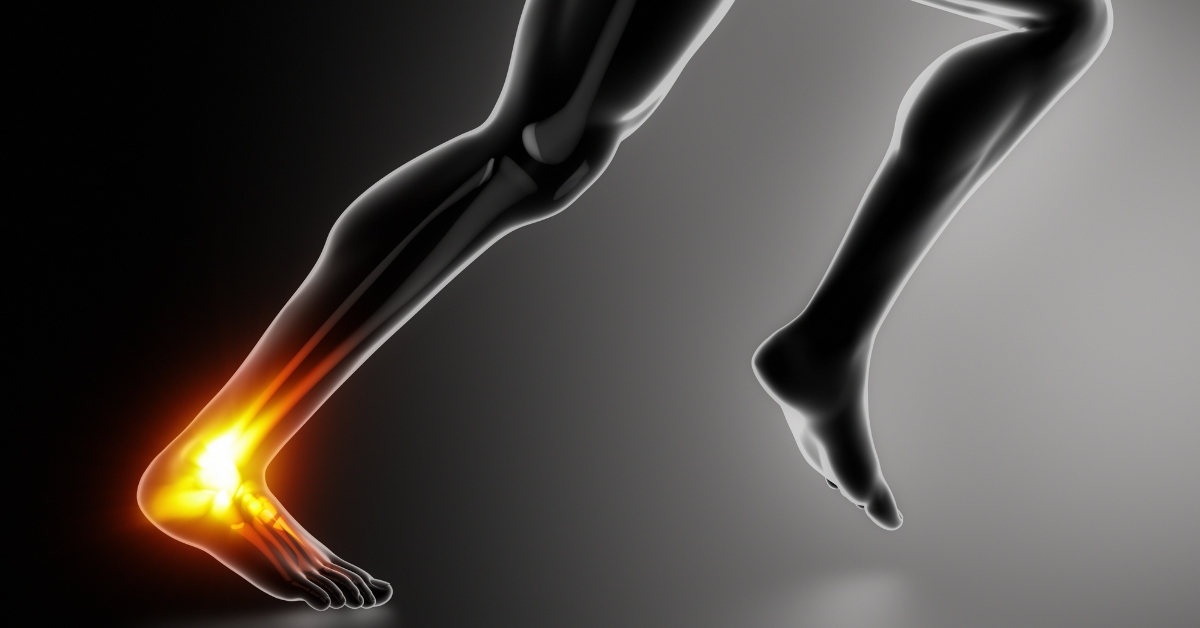
Common Types Of Achilles Tendon Pain From Running
Not all Achilles pain feels the same, and where you feel it can tell you a lot. Two common patterns show up frequently in runners and active adults.
Many people deal with mid portion Achilles tendinopathy. This shows up as pain in the middle of the tendon itself, often a few inches above the heel, and it can feel stiff when you first get out of bed.
Others feel insertional Achilles pain. This sits right where the tendon attaches to the back of the heel bone and often reacts to uphill running, jumping, or aggressive calf stretching.
Pain can show up as a slow, nagging ache that builds over weeks or months. It can also feel like stiffness at the start of a run that eases for a while, then flares after you cool down.
Achilles Tendonitis vs Tendinopathy: What Runners Should Know
| Achilles Pain Pattern | Common Symptoms | Often Feels Worse With |
|---|---|---|
| Mid-portion Achilles pain | Soreness or stiffness a few inches above the heel | Running volume, speed work, hills |
| Insertional Achilles pain | Pain where the tendon meets the heel bone | Uphill running, jumping, deep stretching |
| Early tendon irritation | Mild stiffness that warms up with movement | First steps in the morning, sudden training increases |
| More serious tendon injury | Sharp pain, popping sensation, weakness | Pushing off, standing on toes, running through pain |
Why Achilles Tendon Pain From Running Shows Up In Active Adults
Achilles pain rarely appears out of nowhere. It usually builds from a mix of training choices, strength gaps, and life factors that pile up.
Common training triggers include changes such as:
- Jumping mileage too quickly
- Adding speed work or hills without enough buildup
- Shifting from casual running to a structured race plan overnight
- Following a weekend warrior pattern where most hard work happens on just one or two days
Strength and mobility factors also matter. You might notice weak calves that fatigue early, limited ankle mobility that forces the tendon to work harder, or hip and glute weakness that changes how your leg loads with each step.
Age and training history influence things for aging athletes. Tendons still adapt, but they need more respect for recovery, gradual progression, and consistent strength work.
If you run, climb, lift, and play recreational sports in the same week, total load on the tendon can climb quickly. Achilles pain often shows up right when life is busy, stress is high, and sleep is not ideal.
How To Tell If Your Achilles Tendon Pain From Running Is Serious
Key Symptoms You Should Not Ignore
Some soreness is normal when you train hard, but Achilles pain has some specific patterns that deserve attention. Noticing these early can save a lot of time and frustration.
Common warning signs include:
- Pain or stiffness in the tendon with your first steps in the morning
- A tender or thickened spot along the tendon when you press it
- Pain that warms up with light activity, then returns stronger later in the day
- Swelling or a warm feeling around the tendon after runs or workouts
More serious symptoms deserve quick attention.
These can include:
- A sudden pop or snapping feeling in the back of the ankle
- Trouble pushing off the ground normally
- Difficulty standing on your toes
- Immediate swelling or a visible gap along the tendon
- Sharp pain that causes limping right away
If those show up, stop training and get evaluated instead of trying to push through.
When To Rest, When To Modify, And When To Keep Moving
You do not need to quit all activity at the first sign of Achilles soreness. Instead, you adjust the type and amount of load you put through the tendon.
A smart approach uses relative rest. That means:
- Reducing or stopping activities that cause sharp, worsening pain
- Backing off from hills, sprints, and jumping for a period of time
- Keeping some pain free or low pain movement in your week, such as cycling, walking on flat ground, or gentle strength work
A simple rule of thumb is helpful. If pain stays mild, does not spike during or after the workout, and improves over days, the load is likely manageable.
If pain ramps up during activity, lingers into the next day, and keeps trending higher, then the tendon needs a change in plan. Adjusting volume, intensity, or exercise type can make a big difference.
Do You Need Imaging Or A Specialist Right Away
Many runners worry they need an MRI as soon as pain shows up. In a lot of cases, your story, symptoms, and movement patterns give more useful information than a picture of the tendon.
Imaging can help in certain situations. For example, if you felt a sudden snap and lost strength right away, if your pain does not change at all after several weeks of smart loading, or if a provider suspects a partial tear or more complex issue.
For most active adults, a detailed movement assessment is the best first step. A skilled clinician watches how you walk, run, squat, and load the tendon, then uses that information to guide a plan.
Imaging can show changes in the tendon that do not always match pain levels. Focusing on what your body can do, how it feels, and how it responds to training often leads to better results than chasing every detail on a scan.
Quick Self-Checks For Your Achilles
A few simple checks can help you understand how irritated the tendon feels before deciding what to do next.
Pay attention to:
- First steps in the morning: Does the tendon feel stiff or sore before it loosens up?
- Pressing on the tendon
Do you feel a tender spot a few inches above the heel or right where it attaches? - Single-leg heel raises: Can you rise up and lower down on the sore side with similar control?
Light hopping: Does hopping feel sharp, weak, or unstable compared with the other side?
Fixing Achilles Tendon Pain From Running
What To Do In The First Week Of Pain
The first week or so after pain shows up is about calming things down without shutting your body off. The idea is to reduce stress on the tendon, not remove all movement.
Simple adjustments can help a lot:
- Drop your running volume by around one third to one half
- Take a break from hills, sprints, and intense intervals for now
- Choose flat, predictable surfaces instead of technical trails
- Use ice after activity if it feels soothing, or gentle heat if stiffness is the main issue
You can also try light calf isometrics to calm symptoms. For example, hold a double leg calf raise at mid height for twenty to thirty seconds several times a day, as long as pain stays low.
Total rest often feels good for a few days, but it can make the tendon weaker and more sensitive over time. Some smart, controlled load keeps the tissue engaged and ready to rebuild.
Why Tendons Need Strength And Not Just Stretching
Achilles pain often creates a strong feeling of tightness. The first instinct for many athletes is to stretch hard and often, but this can backfire.
Most sore tendons do not want long, aggressive stretching as the only tool. They respond much better to controlled, progressive strength work that trains them to handle load again.
Tendons like steady loading that increases slowly. They benefit from exercises that challenge the calf muscles and lower leg, with reps that feel challenging but do not spike pain sharply.
Two strategies often help a lot. Isometric holds can calm symptoms, and slow, heavier calf raises can rebuild strength and tendon capacity over time.
Stretching can still have a place, but it should not stand alone. If you only stretch and foam roll, you miss the real driver of recovery, which is building strength and resilience.
Simple Strength Exercises That Support Your Achilles
You do not need a large gym to begin. Bodyweight, a step, and a simple setup can take you a long way, especially in the early stages.
Here are some common starting points that many runners and active adults tolerate well:
- Isometric wall calf holds
Lean into a wall with one leg back and the heel on the ground. Push into the floor as if starting a calf raise, hold that tension for twenty to thirty seconds, and keep pain at a mild level. - Double leg slow calf raises
Stand on the edge of a step, rise up over three seconds, pause briefly, then lower over three seconds. Focus on smooth, controlled movement rather than speed. - Seated calf raises
Sit with your feet on the floor and a weight or heavy object on your knees. Push your heels up, pause at the top, then lower back down under control.

As symptoms improve, progression becomes important. You can shift more work to a single leg, add more weight, or increase the range of motion on the step to continue building capacity.
The key is gradual increase over time. When load and volume climb slowly, your tendon has a chance to adapt in a healthy way.
Smart Changes To Your Running And Training
Healing does not always require you to stop running forever. It does require intention in how you structure your training.
Useful adjustments can include shortening individual runs but keeping a similar number of days, or replacing some runs with lower impact cardio like cycling, pool running, or rowing. Sticking to flat routes and avoiding steep downhills or long climbs early in rehab also protects the tendon.
If you also climb, lift, or play a sport like basketball or soccer, think about your total weekly strain. Your Achilles does not care which sport adds the load, it only feels the combined stress.
You may need to:
- Spread hard sessions out across the week instead of stacking them
- Drop one explosive session while pain calms down
- Keep general strength training, but modify or swap anything that directly irritates the tendon
The goal is to stay as active as possible within a pain level that the tendon can handle. That balance lets you protect fitness while recovery moves forward.
How Mobility And Running Form Affect Your Achilles
Mobility controls how your joints share load, and if one area does not move well, another part of your body often picks up the slack. For the Achilles, a few specific spots matter.
Ankle dorsiflexion, or the ability of your ankle to bend over your toes, plays a big role. If this motion is limited, your tendon can take more stress with each step.
Calf flexibility also influences how heavy each push off feels. Very stiff calves can make the tendon feel like it is working overtime with every stride.
Hip mobility and strength affect how your entire leg lines up when your foot hits the ground. Poor hip control can change your stride and create extra stress lower down.
Running form contributes as well, even if there is no single perfect stride. Certain patterns can load the Achilles more, such as overstriding where your foot lands too far in front, very low cadence that increases impact per step, or extreme forefoot striking without enough calf strength to support it.
A basic gait check, even with simple video from the side and behind, can provide helpful clues. Small tweaks to form, combined with strength work, often make running feel smoother and less painful on the Achilles.
What Usually Does Not Fix Achilles Pain On Its Own
It is easy to chase quick fixes when pain hangs around. Some tools can help, but they rarely solve the problem by themselves if you ignore load and strength.
Common examples that often get overvalued include:
- Only stretching and foam rolling
- Using massage, cupping, or dry needling as the sole approach
- Constantly switching shoes in search of a perfect solution
- Relying on pain medication while keeping the same training load and routine
These strategies may give short term relief, and they can complement a good plan. Without a clear strength progression and smart training changes, the pain usually returns when intensity ramps back up.

Preventing Future Achilles Tendon Pain From Running
Building A Stronger, More Resilient Tendon
Once symptoms start to calm, the next goal is preventing the same issue from cycling back. That means training the tendon to handle more than normal daily stress.
Long term, it helps to keep key elements in your routine, such as:
- Calf strength exercises in your weekly plan
- Single leg balance and control drills in your warm ups
- Occasional power work, like small hops or skips, when symptoms have settled and strength has improved
Treat your lower legs like any other important muscle group. When they receive regular, thoughtful training, the Achilles becomes a strength instead of a constant concern.
Smarter Training Cycles For Runners And Active Athletes
Your Achilles responds well to structure and rhythm. It appreciates a weekly pattern where hard days and easier days support each other.
Some simple ideas make a big difference. Avoid stacking all of your toughest sessions next to each other, and alternate high intensity days with easier recovery or cross training days.
Increase weekly mileage or total volume gradually rather than in large jumps. If you are an aging athlete, pay extra attention to recovery through sleep, nutrition, and occasional planned deload weeks where training eases back briefly.
Gear, Shoes, And Daily Habits That Support Your Tendon
Shoes do not cure Achilles pain, but they can support your plan. Think of them as helpful tools inside a bigger strategy.
Practical habits include replacing running shoes before they are completely worn out and avoiding major sudden changes, such as switching directly from very cushioned shoes to very minimal ones. Some people also do well with temporary heel lifts or slightly higher drop shoes if lower drop models irritate the tendon.
Daily life influences things more than many people realize. Long periods of sitting can leave calves and Achilles tendons feeling tight every time you stand up quickly.
Simple daily choices can help, such as:
- Standing up and walking briefly every hour
- Doing a few light calf raises or ankle movements during breaks
- Taking the stairs at an easy, controlled pace rather than sprinting when the tendon is sensitive
These small actions build up over time. They either support your recovery and long term tendon health or keep adding tiny doses of extra stress.
Getting Back To Strong, Confident Running Without Achilles Pain
How We Help Active Adults And Athletes In Northern Colorado
If you deal with Achilles tendon pain from running, you probably care about more than just getting rid of discomfort. You want to trust your body for runs, climbs, lifts, and the active life that matters to you.
At Up and Running Physical Therapy, the focus is on keeping you moving while the real issue gets addressed. We do not rely on long rest periods as the only answer, and we prioritize strategies that match how you train.
We work one to one with runners, active adults, climbers, weekend warriors, and aging athletes across Fort Collins, Loveland, Windsor, Greeley, Wellington, and surrounding Northern Colorado communities. Each person receives personal attention, clear explanations, and a plan that fits individual goals and schedules.
Our approach stays movement based and performance focused. Whether you run on local roads, climb in the canyon, or train in the gym, we aim to support the way you want to live and move.
Our Three Step Recovery Method For Achilles Tendon Pain From Running
To keep recovery clear and organized, we use a simple three step structure. This method helps your plan feel purposeful instead of random.
Step one focuses on calming pain and protecting the tendon. We help you adjust training, select the right type of loading, and lower symptoms without losing all of your fitness.
Step two rebuilds strength and tendon capacity. A targeted strength plan trains your Achilles, calf, and lower body to handle more load, so you are not always on the edge of another flare up.
Step three guides your return to performance with confidence. We work through a clear progression back to running, racing, climbing, or lifting so your return does not feel like a guess.
With this method, the goal is not just short term relief. The goal is a stronger, more resilient Achilles that supports the active lifestyle you enjoy.

Why One To One, Athlete Focused Care Matters
Cookie cutter handouts and generic protocols often miss key details that matter to your situation. Your training history, sports, goals, and everyday life all influence what your Achilles needs.
In a one to one session, we can:
- Look closely at how you move, run, jump, and load the tendon
- Break down your training plan and identify the biggest stress points
- Create a clear, step by step plan that fits your real world schedule
- Adjust that plan quickly based on how your body responds over time
You stay involved in every decision. Our role is to provide coaching, structure, and support so you do not have to guess what comes next.
Ready To Take The Next Step
Living with constant worry about Achilles pain does not have to be your normal. With the right information and a clear plan, it becomes possible to move, train, and run without second guessing every step.
Up and Running Physical Therapy offers a Free Discovery Call with a Doctor of Physical Therapy so you can talk through your goals, your symptoms, and an appropriate recovery path. This conversation helps clarify what is going on and which next steps fit your situation best.
If you feel ready to move past frustration and return to the activities you enjoy, support is available. Call Up and Running Physical Therapy at (970) 500 3427 to schedule your Free Discovery Call and begin your path back to strong, confident movement.