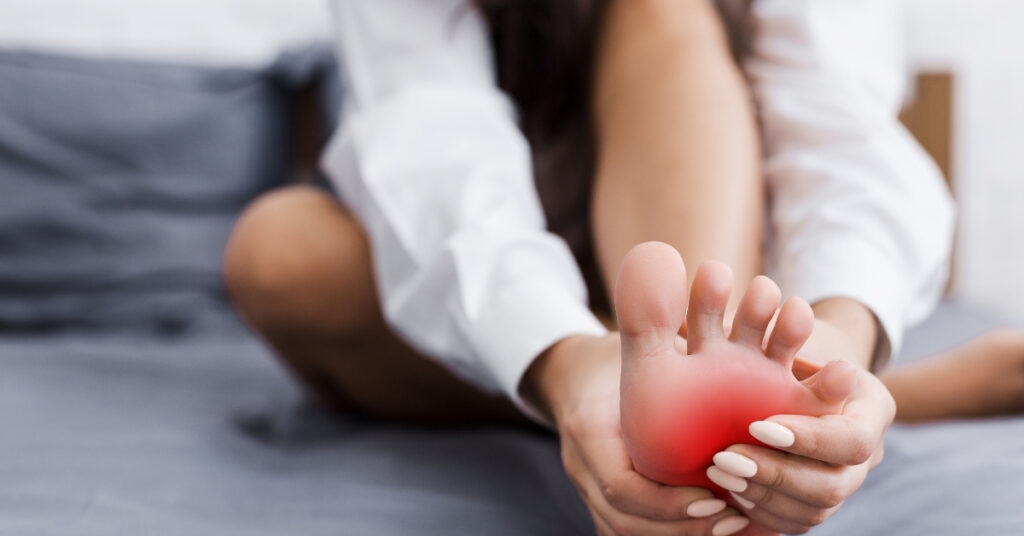
If you keep asking yourself, “Why do my feet hurt when I wake up?” and dread those first stiff steps out of bed, you are not alone, especially if you run, lift, climb, or chase kids all day.
Morning foot pain is incredibly common in active people, and it can be frustrating when it keeps showing up day after day.
As a sports physical therapist who works with runners and active adults, I see this pattern all the time. Your feet feel like rocks in the morning, then they slowly loosen as you move, until the entire cycle repeats the next day.
That morning pain is not just “getting older” or something you have to accept. It is usually your body’s way of telling you that certain tissues are overloaded, stiff, or not doing their job well.
- Maybe you recently increased your mileage, started speed work, switched shoes, or came back to running after pregnancy.
- Maybe you stand at work for long hours, climb on weekends, or train hard in the gym, and all of that load shows up most clearly when you first get out of bed.
In this article, we walk through what is actually happening in your feet overnight, the most common causes of that first step pain, and simple ways to start easing it.
Learn how to tell normal stiffness from a real problem and when it is time to get some help before a small ache turns into a full blown injury.
Understanding Morning Foot Pain In Active Adults And Runners
What Is Actually Happening In Your Feet Overnight
When you sleep, your feet finally get a break, but the tissues that support you all day tighten up. Your calves, plantar fascia, and small foot muscles sit in one position for hours and lose some of their easy glide.
Then you stand up, and all at once, your body weight loads those stiff tissues and they complain. The shock of that first load on sleepy tissue is often what produces the sharp or achy first step pain.
A little morning stiffness that fades in a few steps can be normal, especially if you train hard or spent a long day on your feet. Pain that sticks around, gets sharper, or makes you limp is your body asking for a closer look.

Common Causes Of Morning Foot Pain For Runners And Active Adults
Morning foot pain has patterns. When you understand those patterns, your symptoms start to make a lot more sense.
Plantar Fasciitis And Fascia Overload
If your first step out of bed sends a sharp ache through your heel or arch, plantar fasciitis is a likely suspect. The plantar fascia is a thick band on the bottom of your foot that helps support your arch every time you stand, walk, or run.
It can become irritated when it takes on more stress than it can handle, such as when you:
• Spike your mileage or pile hard workouts together
• Add hills, speed work, or long descents too quickly
• Stand on hard floors all day with little support
• Wear worn out shoes or rotate into very different shoes too fast
With plantar fasciitis, pain often:
• Feels worse with those first few steps in the morning
• Eases a bit as you move around
• Creeps back if you sit for a long time then stand again
• Increases after a run, especially later in the day
Over time, that repeated overload can lead to a stubborn cycle of pain and stiffness. Catching it early and adjusting your load often makes a big difference.
Tight Calves, Achilles Irritation, And Limited Ankle Mobility
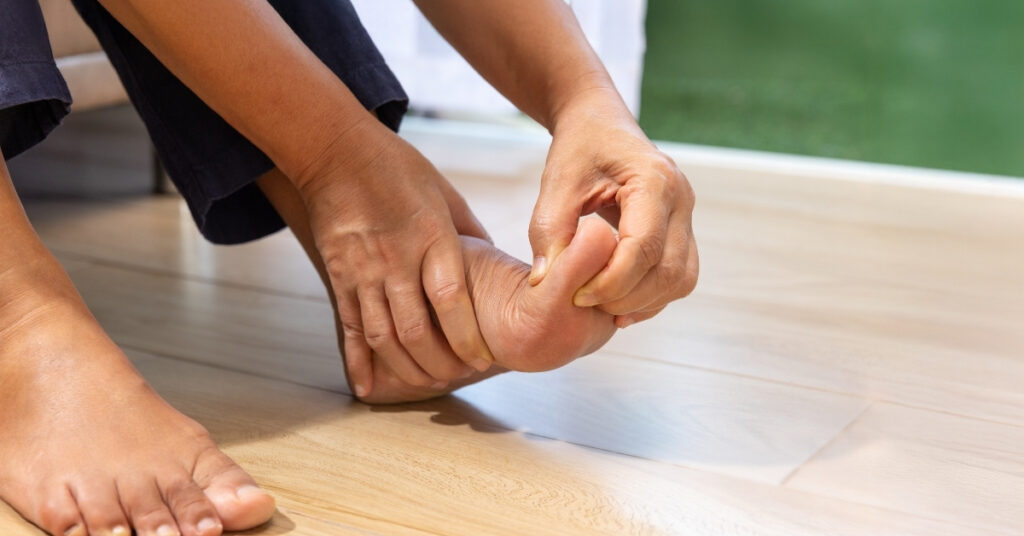
Your calves and Achilles tendon act like a powerful spring for your stride. When that spring is stiff or irritated, your foot and arch take more of the beating.
You might notice:
• A constant tight calf feeling that stretching never seems to fix
• Pulling or ache at the back of your heel or low calf
• Difficulty getting your knee over your toes when you squat or lunge
If your ankle does not bend well, your heel may lift early when you walk or run. That pushes more load into your forefoot and plantar fascia, and it can show up as morning pain that does not fully go away as you move.
Foot Strength And Stability Issues
Your feet need strength, not just support from shoes or inserts. Weak or poorly controlled foot muscles can allow your arch to collapse under load, even if your shoes feel supportive.
You may see or feel:
• Collapsing arches when you squat, land, or step down
• Toes that grip the ground to keep you stable
• Trouble balancing on one leg for more than 10 to 15 seconds
Over time, this constant give in the foot stresses the fascia, joints, and tendons. Morning is often when that low level strain finally speaks up the loudest.

If you are tired of waking up and hobbling through those first steps, you do not have to figure it out by yourself. A conversation with a sports physical therapist can help you understand what is going on and what to do next.
Up and Running Physical Therapy in Fort Collins offers a Free Discovery Call with a Doctor of Physical Therapy to discuss your goals, your symptoms, and your options. This is a chance to be heard, ask questions, and see whether a focused plan could help you move toward pain free mornings.
Call us at (970) 500 3427 to schedule your Free Discovery Call.. Small, informed steps today can turn those painful first steps out of bed into strong, confident strides.
Shoes, Surfaces, And Running Form
Your feet adapt to what you train in most. Big changes in shoes or surfaces can wake up pain you did not know was brewing.
Common triggers include:
• Switching from a very cushioned shoe to a minimal shoe too quickly
• Rotating into new shoes with a big change in heel to toe drop or stack height
• Running more on concrete or steep road surfaces
• Jumping into technical trail running without gradually building up
Your form can play a role as well. If you take long reaching steps or slam your heels with each stride, impact spikes up through your legs and your feet absorb a lot of that load.
Systemic And Less Obvious Contributors
Not all morning foot pain starts in the foot itself. Sometimes the deeper cause begins higher up the chain or relates to broader changes in your body.
You might notice more morning pain if you:
• Are an aging athlete with less recovery time between hard sessions
• Experience high stress or low sleep for long stretches
• Have a systemic inflammatory condition that tends to flare in the morning
Postpartum changes can also show up in your feet. Pregnancy and delivery change your ligament laxity, pelvic position, and core control, which can alter how you load your feet and arches.
How To Tell What Is Causing Your Morning Foot Pain
Simple Self Assessment Questions
You do not need to guess blindly about what is going on. A few simple questions can narrow things down.
Ask yourself:
• Where exactly does it hurt: heel, arch, toes, top of foot, or whole foot
• Does the pain fade after a few minutes of walking or does it stay with you
• Does running make it feel better, worse, or about the same afterward
• Do you feel tightness mostly in the calf, in the sole of the foot, or both
Patterns help guide the picture. Heel and arch pain that eases after a short walk often suggests plantar fascia overload, while persistent, sharp, or spreading pain needs more careful evaluation.
Quick At Home Movement Tests
A few easy tests can give you more information about how your ankles, feet, and hips are working.
For calf and ankle mobility:
• Stand facing a wall, barefoot
• Place your big toe a few inches from the wall
• Bend your knee toward the wall without lifting your heel
If your knee cannot touch the wall without your heel lifting, your ankle mobility is limited. That often feeds into plantar fascia and front of foot overload during walking and running.
For single leg balance and arch control:
• Stand barefoot on one leg with your arms relaxed
• Notice if your arch drops, your toes grip, or your hip shifts to the side
If you wobble a lot or your arch caves in, your foot and hip stability could use work. That instability can show up as morning stiffness or soreness, especially after harder training or long days standing.
For basic toe strength and control:
• While standing, try lifting just your big toe while the others stay down
• Then press your big toe down and lift the smaller toes
If your toes barely move independently, your small foot muscles are not contributing much. Strong, active toes help support the arch and share the workload with the plantar fascia.
When Self Diagnosis Is Not Enough
Self checks are helpful, but they have limits. If your pain is sharp, worsening, or lasts more than a few weeks, it deserves more than guesswork.
At that point, a full movement assessment can pick up patterns that quick tests miss. A sports physical therapist can look at how your feet, ankles, knees, hips, and core all work together when you walk, squat, and run.
Morning Routine To Ease First Step Foot Pain: Gentle Wake Up Moves Before You Stand
You can change how your feet feel in the morning in just a few minutes. Think of it as a warmup for your first steps.
Before you stand up, try this simple sequence while still in bed or sitting at the edge:
• Ankle pumps: point and flex your feet 15 to 20 times
• Ankle circles: draw circles in each direction with each foot
• Toe flex and extend: curl your toes, then spread them wide 10 to 15 times
These moves get blood flowing and reduce that stuck or rusty feeling. Your first steps then feel less like a shock to stiff tissue.
Easy Calf And Plantar Fascia Stretch
Still sitting at the edge of the bed or on a chair, you can add some gentle stretching.
For a light calf stretch:
• Loop a towel or band around your forefoot
• Gently pull until you feel a mild stretch in the calf, then hold for 20 to 30 seconds
For a plantar fascia stretch:
• Cross one ankle over the opposite knee
• Pull your toes back toward your shin and massage the arch with your thumb
Stay at a mild to moderate stretch, not a strong strain. The goal is to nudge your tissues awake, not to force them to loosen all at once.
Daytime Fixes: Strength, Mobility, And Training Tweaks: Key Strength Exercises For Happier Feet
Stronger feet and calves handle load without complaining as much. Simple bodyweight exercises can go a long way.
Consider working in:
• Calf raises on two legs, then progress to single leg as they become easier
• Bent knee calf raises to target the deeper soleus muscle
• Short foot work, where you gently lift your arch without curling your toes
• Single leg balance holds, then add reaching or light weights for challenge
Start with slow, controlled reps and focus on quality. Gradually add resistance or longer holds as your feet and lower legs adapt.
Mobility And Tissue Work For Stiff Feet And Calves
Mobility work helps your tissues slide and move more freely. It also helps your new strength show up in real life movement.
Helpful options include:
• Calf stretches with your heel down and knee straight, then bent
• Light rolling of your calves on a foam roller or ball
• Rolling a small ball under your arch for short bouts in a few different spots
Keep pressure at a level that feels like a gentle release, not a sharp pain. Too much irritation from aggressive rolling can actually make symptoms worse.
Smart Training Changes For Runners
Morning foot pain does not always require you to stop running. Often it responds well to small tweaks in training load and structure.
Helpful changes can include:
• Reducing total weekly mileage by 10 to 20 percent for a short period
• Swapping one hard workout for an easier run or cross training session
• Moving fast intervals onto softer surfaces, such as trails or track
• Using a walk and run pattern temporarily to reduce impact per step
One of the simplest wins is to avoid stacking hard days back to back. Giving your tissues a real chance to recover between bigger efforts is often the difference between soreness and injury.
Special Considerations For Postpartum, Aging, And High Impact Athletes
Postpartum And Pelvic Health Links To Foot Pain
After pregnancy, your body feels different, sometimes long after delivery. Your posture, ligament laxity, and muscle coordination all shift, which can change how you load your feet.
If your pelvic floor and deep core are not doing their job well, your hips and feet pick up the slack. That extra demand can mean overworked arches, gripping toes, and more morning pain.
You may notice:
• Foot pain alongside leaking when you run, jump, or lift
• A feeling of heaviness or pressure in the pelvis after impact workouts
• Trouble engaging your core during single leg work or balance tasks
When the system above the foot improves, foot symptoms often settle. A combined approach that looks at the feet, hips, core, and pelvic floor together can be especially powerful for postpartum athletes.
Aging Athletes And Recovery Needs
If you have been active for decades, your engine still wants to go, but your tissues may ask for a different plan. Recovery becomes more important with age, even if you feel mentally ready for volume.
With age, collagen in tendons and fascia changes, and you do not bounce back from high volume weeks as quickly. Morning stiffness can be a gentle nudge to respect rest and embrace strength training.
Helpful shifts include:
• Building in planned rest or lighter days instead of waiting for pain to force them
• Prioritizing strength work for calves, hips, and trunk at least twice each week
• Spending a bit more time warming up before faster runs or heavy lifting sessions
This does not mean you are fragile. It simply means that a more intentional structure helps you keep doing what you love for longer.
Climbers, Lifters, And Weekend Warriors
If you climb, lift, or hit intense weekend sessions, your feet still take a beating even if running is not your main sport. Tight climbing shoes, long hours standing, or heavy barbell work all change how your feet are loaded.
Common patterns include:
• Climbers with cramped toes and stiff plantar fascia from tight shoes and steep routes
• Lifters with limited ankle mobility that shifts load forward into the foot
• Weekend warriors who sit most of the week, then overload their feet in one or two big days
For these athletes, small daily habits are powerful. Time barefoot on safe surfaces, regular ankle mobility work, and simple foot strength drills can help balance the heavy demands of sport.
When It Is Time To See A Sports Physical Therapist
Morning foot pain does not always require a clinic visit, especially when it fades quickly and responds to simple changes. When pain sticks around or starts to limit your training and daily life, it deserves more attention.
Red flag signs include:
• Sharp or stabbing pain that makes you limp
• Swelling, redness, or warmth in a specific spot on the foot
• Numbness, tingling, or burning in the foot or toes
• Pain that keeps worsening over two to four weeks, despite easier training
• Pain that forces you to cut runs short or avoid certain activities
A running focused exam does more than poke at your foot. A skilled physical therapist looks at how you move from your hips to your toes, how you load when you run, and how your training history fits with your symptoms.
The goal is not just to put a label on your pain. The real goal is to understand why your feet hurt when you wake up and to guide you toward stronger, more confident movement.
How Up And Running Physical Therapy Helps You Beat Morning Foot Pain
Getting To The Root, Not Just The Symptom
If your first steps out of bed feel like you are walking on nails, you deserve more than random stretches or generic shoe advice.
At Up and Running Physical Therapy in Fort Collins, the focus stays on how you move, not just where you hurt.
Clinicians watch you walk, squat, and often run, then test your feet, ankles, hips, and core together. That whole picture approach helps uncover the real reason your feet hurt in the morning instead of chasing pain around your arch or heel.
Our Three Step Recovery Method For Active Adults And Runners
The team at Up and Running PT uses a clear three step recovery method so your care feels organized and purposeful. The approach fits runners, active adults, weekend warriors, and aging athletes.
The process looks like this:
• Find the real cause: your story, training load, and a detailed movement exam all come together to explain what is driving your morning foot pain
• Fix the problem: treatment focuses on one on one, personalized plans with hands on care, targeted strength work, and mobility drills that match your sport and life
• Bulletproof your return: a step by step progression helps you return to running, lifting, climbing, or play with a clear plan and long term durability in mind
This style of care avoids cookie cutter protocols and crowded gyms. Sessions stay focused on performance, long term results, and the activities that matter most to you.
Support For Postpartum And Pelvic Health Athletes
If you are postpartum or managing pelvic floor symptoms along with foot pain, it can feel confusing and isolating. Up and Running PT recently added a pelvic health specialist who understands both your athletic goals and your pelvic concerns.
Care connects the dots between leaking, heaviness, core weakness, and foot or lower leg pain. The aim is a system that feels strong from your feet all the way up through your hips, core, and ribcage.
Performance Focused Care For Aging Athletes And Weekend Warriors
Many of the athletes at Up and Running PT are lifelong movers who want to stay that way. Whether you run local races, climb in the canyon, or chase your kids around the park, performance still matters.
Treatment plans emphasize strength, mobility, and smart load management instead of rest alone. The focus stays on keeping you on the roads, trails, walls, and gym floors in Fort Collins and across Northern Colorado.
Your Next Step If Your Feet Hurt In The Morning
If you are tired of waking up and hobbling through those first steps, you do not have to figure it out by yourself. A conversation with a sports physical therapist can help you understand what is going on and what to do next.
Up and Running Physical Therapy in Fort Collins offers a Free Discovery Call with a Doctor of Physical Therapy to discuss your goals, your symptoms, and your options. This is a chance to be heard, ask questions, and see whether a focused plan could help you move toward pain free mornings.
Call us at (970) 500 3427 to schedule your Free Discovery Call.. Small, informed steps today can turn those painful first steps out of bed into strong, confident strides.