Hip pain during pregnancy can feel especially unfair when you love to move. You finally find your groove with running, lifting, hiking, or climbing, and suddenly every step or stride makes your hip grab or ache.
You might hear that pain is just part of pregnancy, but that does not feel helpful when you can barely sleep on your side or finish an easy run. As a pelvic health physical therapy team at Up and Running Physical Therapy, we see how frustrating it is when your active lifestyle starts to feel out of reach.
You still want to feel like an athlete, not just a passenger in your changing body. You want clarity on what is safe, what needs to change, and how to protect your body now so you can return stronger postpartum.
In this blog, you learn:
- What is really going on with hip pain during pregnancy
- Why active women feel it so intensely
- Which movement tweaks can help right away
You also see how pelvic health physical therapy fits into the picture so you can stay active, protect your hips and core, and keep your identity as a runner or athlete intact.
Understanding Hip Pain During Pregnancy And How To Stay Active
What Is Actually Happening To Your Hips During Pregnancy
Pregnancy is not just extra weight in the front. Your whole system shifts to make space for your baby and to prepare for birth.
Hormones such as relaxin and progesterone increase, which helps ligaments loosen so your pelvis can move. At the same time, your center of gravity moves forward, your ribs flare a bit, and your low back and hips take on more load.
If you are a runner, lifter, climber, or someone who likes to move, you feel these changes more.
You ask your body to handle impact, rotation, and single leg control at a time when your support system feels a little less stable.
Your core and pelvic floor also adjust to the growing baby. If they do not keep up with the demand, your hips often step in to do too much, which can turn into pain, tightness, or pinching.
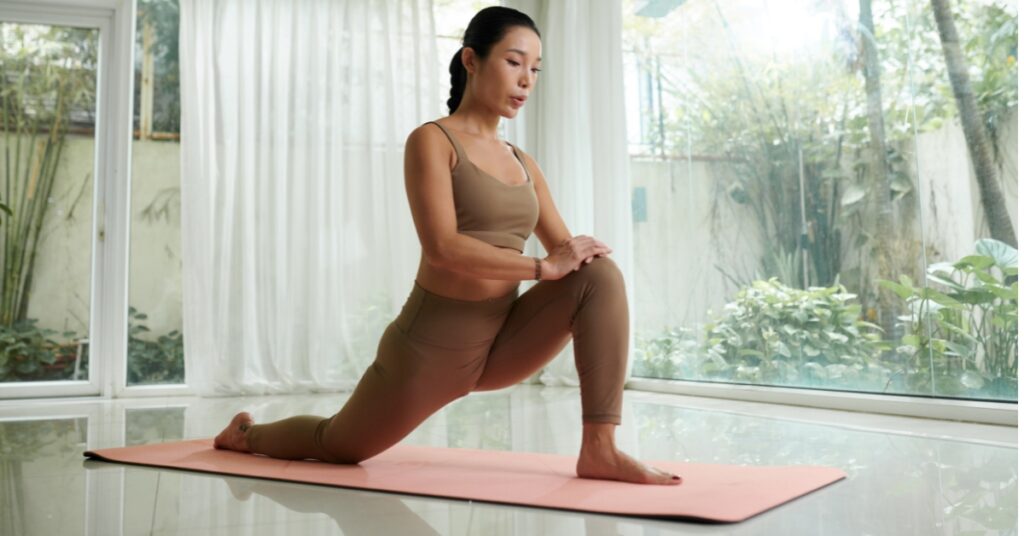
Common Types Of Hip Pain During Pregnancy
Hip pain during pregnancy rarely looks the same from person to person. The location and feel of your pain often give clues about what is going on.
You might notice:
Front of hip or groin pain
• Feels like pinching in the front of the hip when you lift your knee, get into the car, or climb stairs.
• Often tied to hip flexor overload, labral irritation, or extra strain on the front of the joint.
Side of hip pain
• Sits over the bony point on the outside of your hip.
• Can feel sore or sharp when you lie on your side, walk long distances, or stand on one leg.
• Often linked to glute med weakness or tendon irritation.
Deep buttock or back of hip pain
• Sits deep in the butt, near the sacroiliac joint, or wraps into the low back.
• Shows up with rolling in bed, standing up from a chair, or during single leg movements such as running.
Pubic or pelvic girdle pain that feels like hip pain
• Sits in the front of your pelvis, right at the pubic bone, and can radiate toward your groin or inner thigh.
• Often gets worse with walking, stairs, or wide stance positions.
All of these patterns can show up in active pregnancies. None of them automatically mean you need to stop moving, but each one calls for its own plan.
When Hip Pain Is A Red Flag
Most pregnancy related hip pain is very treatable with smart movement and support. There are a few times, though, when you want a skilled provider to check things quickly.
Reach out to a pelvic health provider soon if you notice:
• Pain that stops you from walking normally or makes you limp.
• Pain that keeps you from sleeping most of the night, even with position changes.
• Numbness, tingling, or weakness down the leg.
• Sudden changes in bladder or bowel control.
• Severe pelvic pressure that feels like things might fall out.
There is no need to wait until pain is unbearable. The earlier you catch it, the easier it becomes to calm things down and keep your training on track.
At Up and Running Physical Therapy in Fort Collins, a Free Discovery Call with a Doctor of Physical Therapy is available so you can talk through your goals, questions, and concerns before you commit to care.
During this call, you share what is going on, and a therapist explains how pelvic health and performance focused physical therapy can help you move forward.
If you are ready to understand your hip pain, protect your pregnancy, and plan for a strong return to sport, call (970) 500 3427 or schedule your Free Discovery Call online.

Can You Keep Running With Hip Pain During Pregnancy?
If running is part of your identity, the idea of stopping can feel worse than the pain itself. The encouraging news is that many pregnant runners keep moving with the right adjustments and support.
A simple rule that can help is the one to three out of ten pain guideline:
• During a run, pain stays at or below a three out of ten.
• Pain settles back to baseline within twenty four hours.
• Your form does not break down or turn into a limp.
If you stay inside those lines, your body usually tolerates running well. If pain spikes higher, lingers the next day, or changes the way you move, your body is asking for a shift.
Helpful tweaks can include:
• Shorten your runs, but run more often at lower volume.
• Add walk breaks or use a run or walk interval.
• Choose flatter routes and softer surfaces.
• Run at a conversational pace instead of chasing speed.
• Space out your runs with true rest or lower impact cross training days.
For some athletes, a training week might shift from several longer runs to something like:
• Three shorter run or run and walk sessions.
• Two strength days that focus on hips, glutes, and core.
• One or two low impact conditioning sessions such as cycling or pool work.
This kind of adjustment keeps your runner brain happy while your hips and pelvis receive the support they need.
Strength Training Tweaks For Active Adults And Aging Athletes
Strength training is one of the best tools during pregnancy. It keeps you durable for day to day life, supports your joints, and sets you up for a smoother postpartum return.
The key is to adjust the how, not only the how much. Instead of pushing heavy personal records, it helps to lean into control, stability, and smart loading.
You might:
• Change deep squats to box squats with a comfortable depth.
• Swap walking lunges for stationary or supported split squats.
• Use a staggered stance deadlift instead of a heavy single leg deadlift.
• Add more rows, hip hinges, and band work for glutes and upper back.
Your strength work now aims to:
• Keep your hips and pelvis stable through range.
• Avoid positions that provoke sharp or grabbing pain.
• Build strength that carries over to lifting, running, and daily life as a parent.
Two or three targeted strength sessions per week often make a huge difference in hip comfort and overall energy. Even modest, consistent work can create a large payoff.
Climbing, Hiking, And Weekend Warrior Activities
If you love the mountains or the climbing gym, pregnancy does not automatically take that away. You just need to become more intentional with positions and volume.
Climbing often asks a lot from your hips and pelvis with:
• High steps and wide stances.
• Drop knees and deep hip rotation.
• Big moves off one leg or one foot.
These same moves can flare hip or pelvic pain when your support system feels more mobile and less stable.
Instead of quitting entirely, you can:
• Choose routes or boulders that use more straight on movement and fewer extreme hip positions.
• Avoid aggressive drop knees or very wide stemming.
• Keep sessions shorter and finish before your form starts to fall apart.
Hikers and outdoor lovers can:
• Use trekking poles to unload hips and pelvis on long descents.
• Shorten stride length on climbs to keep hips more neutral.
• Pick distances that leave you pleasantly tired rather than limping back to the car.
In this season, the main performance goal is to protect long term capacity. You set up your body now so that you can get back to big objectives once pregnancy and early postpartum pass.

How The Pelvic Floor, Core, And Hips Work Together
Hip pain during pregnancy rarely lives in isolation. Your hips team up with your pelvic floor, deep core, glutes, and breathing patterns.
You can picture this system like a canister:
• Diaphragm at the top.
• Deep core muscles around the middle.
• Pelvic floor at the bottom.
• Hips and glutes as powerful supports along the sides.
If one part does not pull its weight, something else has to make up for it. During pregnancy that something else is often your hips.
Signs that your pelvic floor or core might be involved include:
• Leaking urine when you cough, sneeze, run, or lift.
• Feeling heaviness, pressure, or dragging in the vagina.
• Pain during rolling in bed, getting in and out of the car, or going up stairs.
• Needing to grip your glutes or clench your abs just to feel supported.
When care targets only the hip and ignores the pelvic floor and core, relief tends to be short lived. When the whole system receives attention, your hip finally has a chance to calm down.
At Home Strategies To Reduce Hip Pain During Pregnancy
You do not need an hour long routine every day to help your hips feel better. Small, consistent habits often work better than huge, intense efforts.
Here are simple things you can start to use.
Everyday movement habits:
• Break up long sitting with two to three minute walks or gentle stretches.
• Switch which leg you lean on when you stand, or better, stand on both evenly.
• Keep heavy loads close to your body when you carry them.
Posture that helps instead of hurts:
• Let your ribs stack roughly over your pelvis instead of leaning far back.
• Keep a soft bend in your knees instead of locking them out.
• Think tall through the crown of your head rather than chest up and butt out.
Sleep positions for happier hips:
• Lie on your side with a pillow between your knees and ankles.
• Hug a pillow at your chest to keep your upper body from twisting too far.
• If side lying still hurts, place a small pillow or towel under your bump for extra support.
Gentle activation and mobility ideas:
• Short sets of glute bridges with your feet comfortable and close to your hips.
• Side lying clamshells or banded hip abduction in a pain free range.
• Pelvic tilts in standing or on hands and knees to loosen a stiff low back and hips.
The goal at home is not to fix everything alone. It is to help your system calm down, move more evenly, and respond better when you do more focused rehab or training.
How Pelvic Health Physical Therapy Helps Hip Pain During Pregnancy
Pelvic health physical therapy looks at you as a whole athlete, not just a sore hip. At Up and Running Physical Therapy in Fort Collins, support focuses on both comfort now and performance later.
A session often includes:
• A detailed conversation about your training, work, stress, and symptoms.
• A movement screen that might include squats, single leg balance, running form, or climbing positions.
• Testing strength and control in your hips, glutes, and core.
• If you are comfortable, an internal pelvic floor assessment to see how those muscles support you.
From there, care focuses on:
• Calming pain and irritation in the hip, pelvis, and low back.
• Teaching your pelvic floor and core to coordinate with your breath and movement.
• Building strength and control in the specific patterns you need for running, lifting, climbing, or parenting.
Instead of a generic printed sheet of pregnancy exercises, progressions match your body and your current season of life. The big picture is simple: keep you moving, protect your hips and pelvis, and support your long term athletic goals through pregnancy and beyond.

Staying Up And Running Through Pregnancy And Beyond
Pregnancy changes your body, but it does not erase your identity as an athlete. You still deserve to feel strong, capable, and confident in how you move.
With the right guidance, you can adjust training, protect your hips and pelvis, and set yourself up for a powerful return to running, lifting, climbing, or hiking. There is no need to feel broken or to just wait it out without answers.
How Up And Running Physical Therapy Supports Your Hips, Pelvis, And Performance
At Up and Running Physical Therapy, every plan is built around your sport, your symptoms, and your season of life. Care stays one on one with a Doctor of Physical Therapy so sessions stay focused and personal.
The pelvic health team uses a clear three step recovery method so you always know the goal of each phase.
Relieve
- The first focus is to calm your hip and pelvic pain so you can walk, sleep, and get through your day with less irritation.
- This often includes hands on care, gentle movement, and smart activity changes that still fit your lifestyle.
Rebuild
- The next step is to restore strength, control, and coordination in your hips, core, and pelvic floor.
- Programming stays sport specific so what you do in the clinic and at home actually carries over to your running, lifting, or climbing.
Return
- Finally, guidance centers on a safe, gradual return to the activities you love with clear benchmarks and progressions.
Coaching on pacing, volume, and form helps you feel confident pushing again instead of fearing every new ache.
Support For Runners, Active Adults, Climbers, And Aging Athletes
If you are an injured runner, care focuses on protecting your hips during pregnancy and mapping out a smart path back to pain free miles. Strength work, gait tweaks, and pelvic support create a foundation for your running to stay part of your life.
If you are an active adult or weekend warrior, the goal is to balance training, work, and family without letting hip pain control your choices. Clear guidelines help you know when to push, when to pull back, and how to keep your body feeling reliable.
If you are a climber or outdoor athlete, attention turns to helping you keep enjoying the wall and the trails with fewer flare ups. Adjusted positions, better movement strategies, and structured training off the wall help your hips and pelvis feel supported.
If you are an aging athlete, the focus is on long term strength, mobility, and confidence. Hip pain during pregnancy or in the postpartum years does not have to set the tone for the next decades of your movement.

Your Next Step To Get Clarity On Hip Pain During Pregnancy
There is no need to guess your way through hip pain during pregnancy. It is possible to stay safe, keep your athletic identity, and move with more confidence.
At Up and Running Physical Therapy in Fort Collins, a Free Discovery Call with a Doctor of Physical Therapy is available so you can talk through your goals, questions, and concerns before you commit to care.
During this call, you share what is going on, and a therapist explains how pelvic health and performance focused physical therapy can help you move forward.
If you are ready to understand your hip pain, protect your pregnancy, and plan for a strong return to sport, call (970) 500 3427 to schedule your Free Discovery Call. This season can be a powerful chapter in your athletic story, not the end of it.